Putting Homeowners First And How They Want To Power Their Homes
From The US Department Of Energy- June 26, 2026- ”WASHINGTON—”The U.S. Department of Energy (DOE) today released a new analysis finding that nationwide adoption of the 2024 International Energy Conservation Code (IECC) would significantly increase housing construction costs and burden American families with costly Green New Scam mandates. DOE’s analysis found that the 2024 IECC would increase residential construction costs by more than $9.2 billion annually compared to the 2006 code levels, adding more than $127 billion in cumulative costs nationwide.
Energy Department Analysis Finds Proposed International Building Codes Would Cost Americans $9.2 Billion Annually
”If states choose to update their energy codes to the 2024 IECC, construction costs for a typical single-family home could increase by as much as $14,000. These costly mandates force American families to pay thousands of dollars more upfront for a new home, while projected energy savings may take decades to materialize. In most states, estimated payback periods exceed 10 years, with some exceeding 20 years—locking American families into decades-long repayment timeframes and restricting consumer choice.
“American families should not be forced to pay more for a home because of nonsensical energy-related mandates,” said U.S. Energy Secretary Chris Wright. “For too long, climate activists have pushed regulations that increase housing costs, reduce consumer choice, and make it harder for Americans to build and own a home. Thankfully, President Trump will continue fighting for the American people so they can enjoy affordable energy access and the ability to buy the home they desire with the features they choose.”
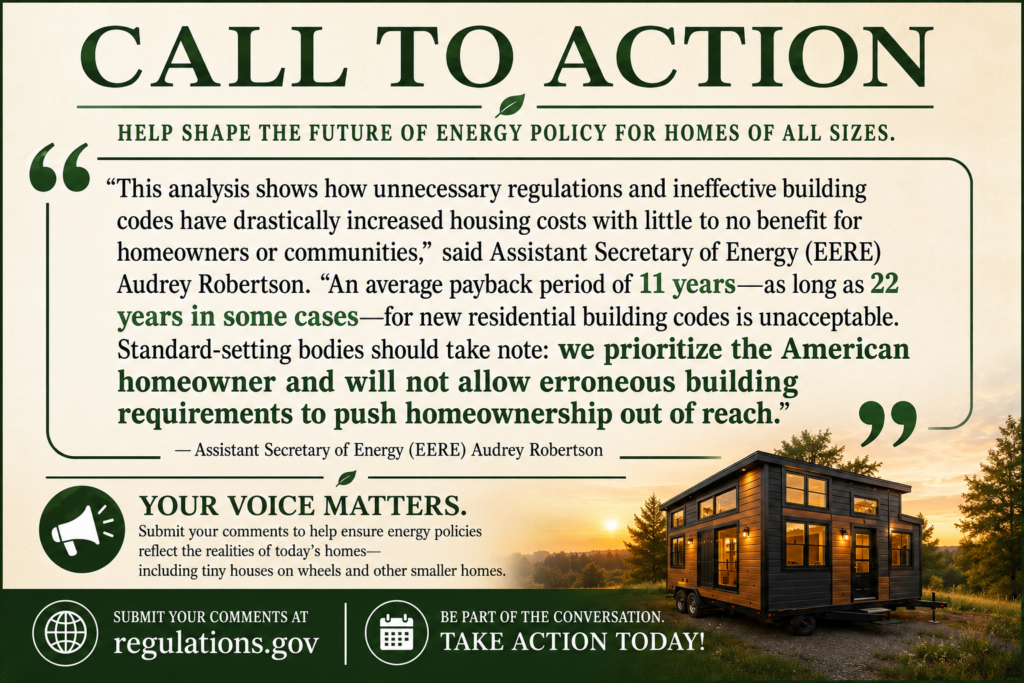
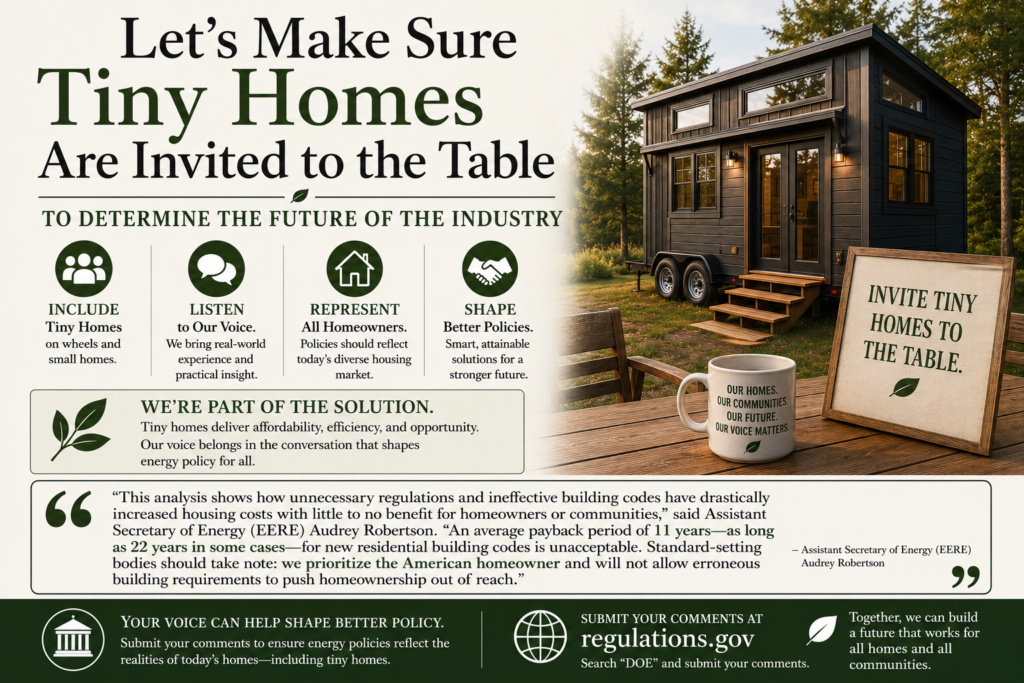
“This analysis shows how unnecessary regulations and ineffective building codes have drastically increased housing costs with little to no benefit for homeowners or communities,” said Assistant Secretary of Energy (EERE) Audrey Robertson. “An average payback period of 11 years—as long as 22 years in some cases—for new residential building codes is unacceptable.
”Standard-setting bodies should take note: we prioritize the American homeowner and will not allow erroneous building requirements to push homeownership out of reach.
” In a letter to the ICC, DOE urged the organization to refocus its code-development processes on affordability, transparency, and fuel-neutral energy efficiency. DOE also encouraged the ICC to omit requirements for onsite energy generation, electric vehicle infrastructure, and greenhouse gas avoidance that increase construction costs, lengthen payback periods, and reduce consumer choice.
”The Energy Department remains committed to working with states, builders, and industry stakeholders to eliminate costly Green New Scam mandates that increase housing costs, restrict consumer choice, and place unnecessary burdens on American families. Under President Trump’s leadership, DOE will continue implementing Executive Order, Removing Regulatory Barriers to Affordable Home Construction, to put homeowners first and allow Americans to decide how to build and power their homes.
Updating and Improving the Methodology for Assessing Affordability and Cost-Effectiveness of Building Energy Codes
Deadline For Comments By August 3, 2026
”DOE has issued a Request for Information to seek input on its methodology for assessing consumer impacts associated with building energy codes.”
My name is Janet Thome, and I am President of Tiny House Alliance USA, a national nonprofit organization dedicated to advancing safe, affordable, and attainable housing through tiny houses. For more than a decade, I have worked with builders, code officials, engineers, educators, nonprofit organizations, and government agencies to improve opportunities for affordable homeownership through smaller housing.
I appreciate the opportunity to provide comments on the U.S. Department of Energy’s Request for Information regarding the methodology used to assess the affordability and consumer impacts of building energy codes. As our nation continues to face a housing affordability crisis, I believe it is important that these evaluations recognize the unique role that tiny houses, starter homes, and other smaller housing types play in expanding homeownership opportunities.
One housing type has been almost entirely overlooked in these discussions—tiny houses on wheels. Although they represent one of the most affordable paths to homeownership for many Americans, they are rarely considered when evaluating the impacts of building energy code requirements. Because of their small size and lower construction costs, additional code requirements can have a disproportionately greater impact on affordability than they do for larger homes. DOE’s methodology should recognize tiny houses on wheels as a distinct housing type when assessing the consumer impacts of future building energy codes.
Tiny Houses and Small Homes Are Part of the Affordable Housing Solution
Tiny houses and other small homes provide attainable homeownership for first-time buyers, seniors, veterans, young families, essential workers, and individuals seeking to downsize. As housing costs continue to rise, these smaller housing options have become an increasingly important part of addressing the nation’s housing shortage.
Construction Costs Have a Greater Impact on Small Homes
Energy code requirements do not affect all housing equally. A fixed increase in construction costs represents a much larger percentage of the total cost of a tiny house or starter home than it does for a larger residence. Requirements that may appear modest on a larger home can significantly affect the affordability of smaller housing.
Consumer Choice
Many consumers intentionally choose a smaller home because it better fits their financial needs and lifestyle. Building energy requirements should preserve opportunities for consumers to select housing that balances affordability, energy efficiency, and personal priorities.
Encourage Innovation
Tiny houses have become a source of innovation in efficient design, material use, and space utilization. Energy policies should encourage innovation rather than create barriers that disproportionately affect emerging forms of affordable housing.
Measuring Consumer Impact
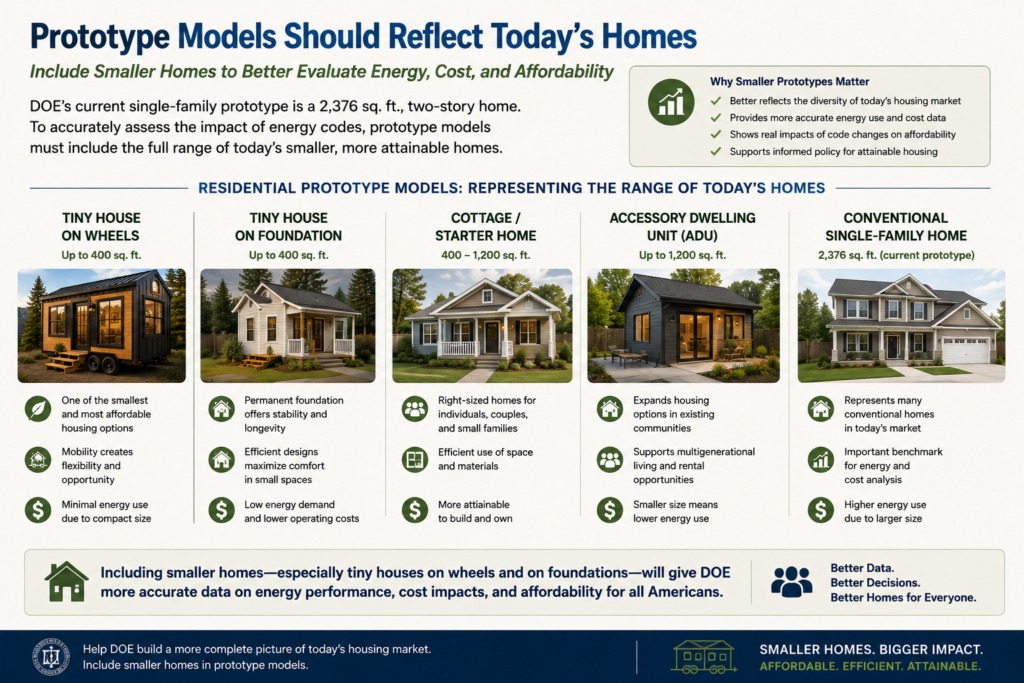
DOE’s evaluation methodology should include the impact of future building energy code changes on:
Tiny houses on wheels
Tiny houses on permanent foundations
Starter homes
Small cottages
Accessory dwelling units (ADUs)
Manufactured homes
Workforce housing
First-time homebuyers
Seniors and veterans
Small builders
Nonprofit housing organizations
The smaller the home, the greater the impact of each additional construction requirement. DOE’s affordability analyses should recognize that a fixed increase in construction costs does not affect all homes equally. Tiny houses on wheels and other smaller homes deserve separate consideration because they represent one of America’s most attainable paths to homeownership.
I am attaching additional documents for your consideration.
Thank you for your time and consideration.
Janet Thome President Tiny House Alliance USA
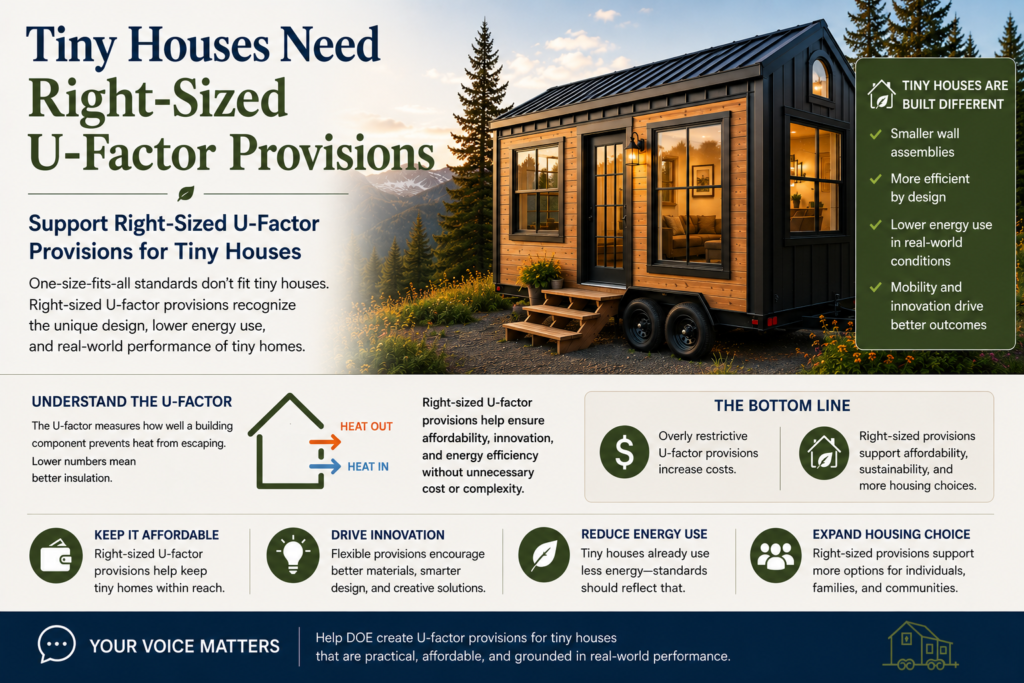
U-Factor Performance: An Alternative to Prescriptive R-Value Requirements
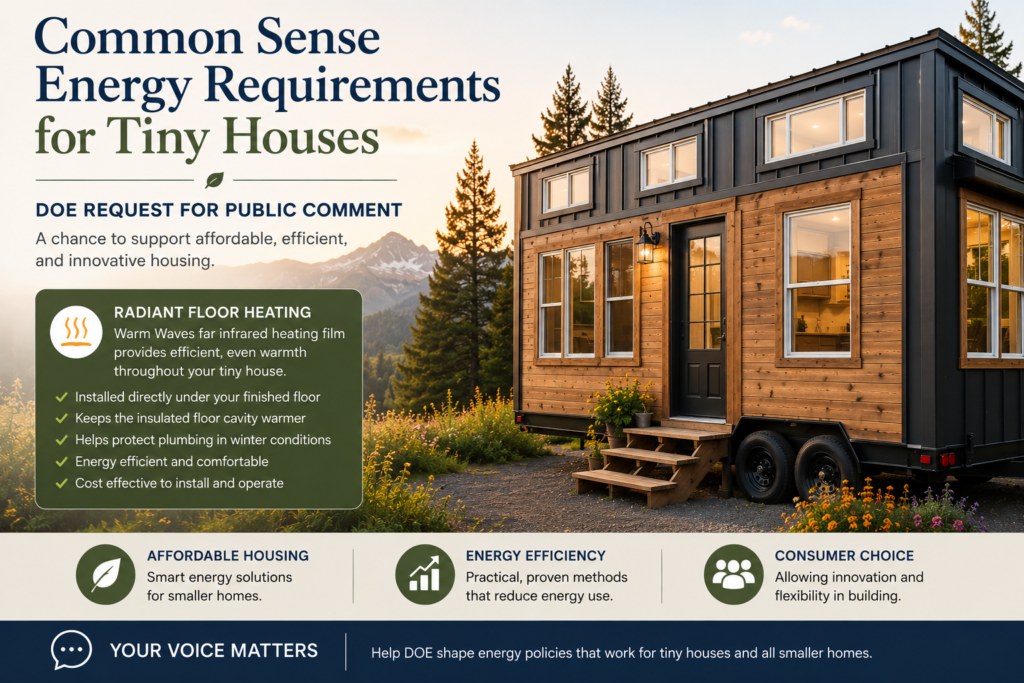
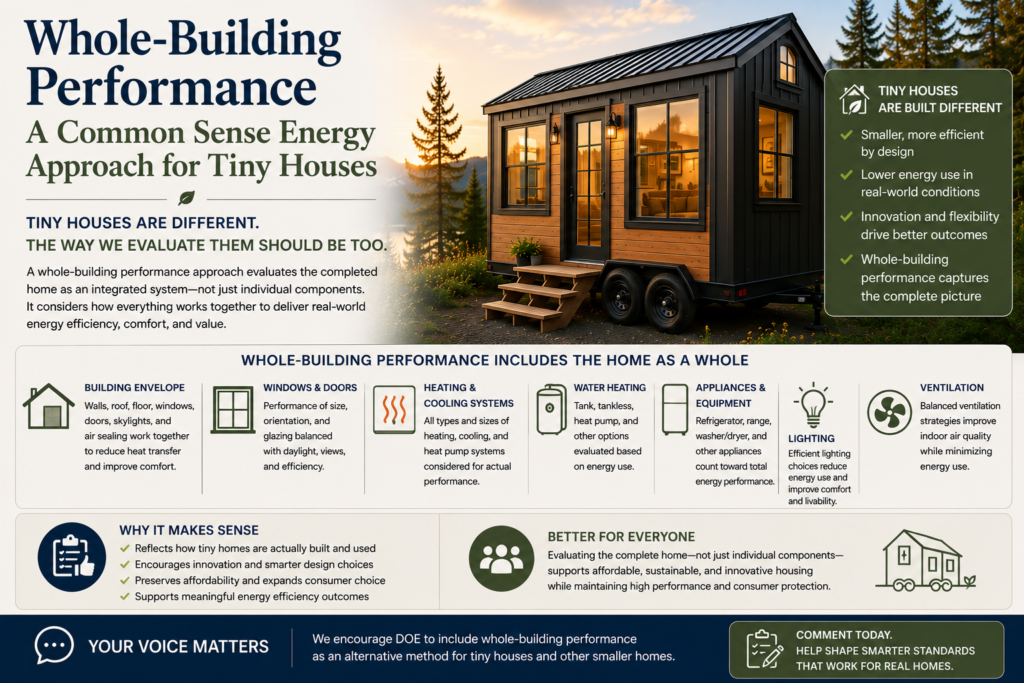
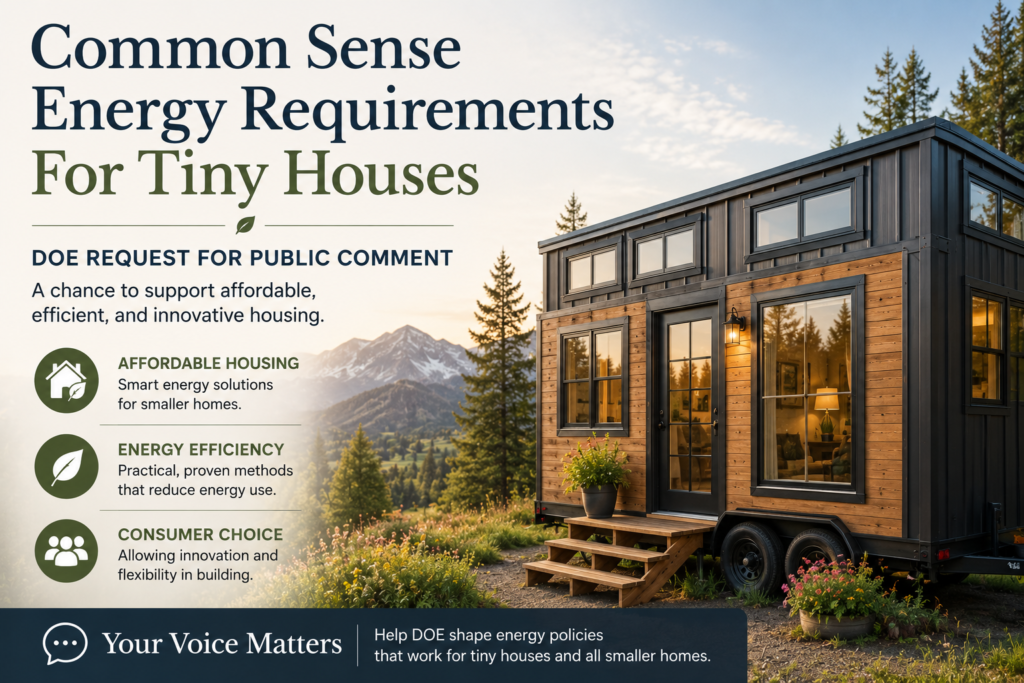
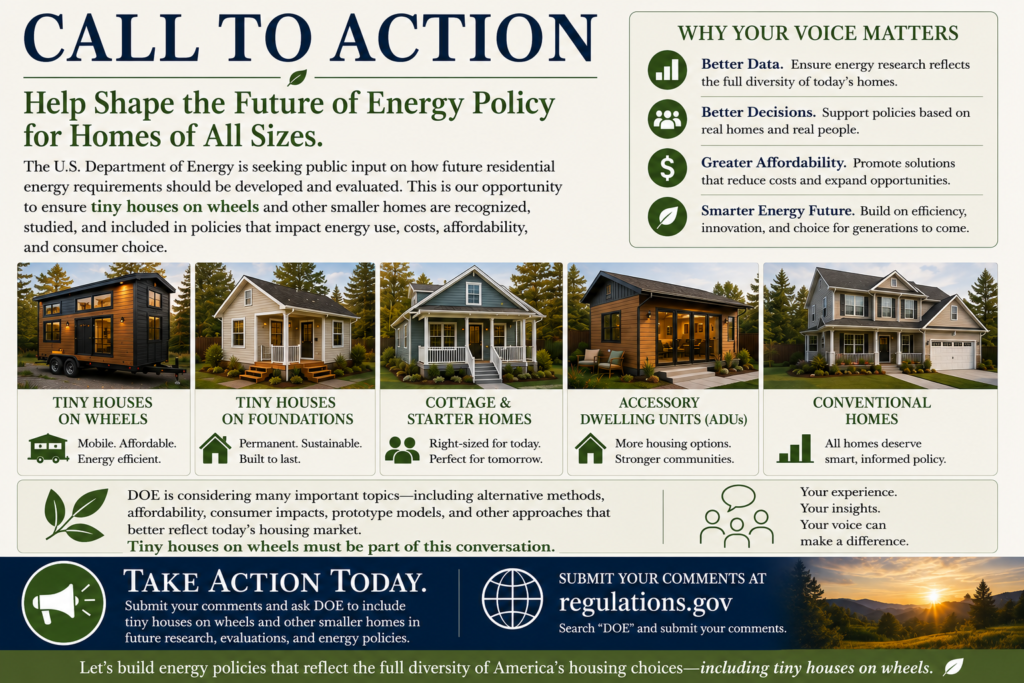
The U.S. Department of Energy is seeking public comments on how future residential energy requirements should be evaluated. This is an important opportunity for the tiny house community to help shape the future of energy policy by encouraging DOE to recognize the unique characteristics of tiny houses on wheels, tiny houses on permanent foundations, and other smaller homes. DOE is requesting input on a wide range of topics, including alternative compliance methods, affordability, consumer impacts, residential prototype models, and other approaches that better reflect today’s evolving housing market.
Tiny houses on wheels have too often been overlooked in national energy policy discussions, despite representing one of America’s most innovative, affordable, and energy-conscious housing options. This is our opportunity to encourage DOE to include tiny houses on wheels in future research, residential prototype models, and energy policy discussions so that future requirements reflect the realities of smaller homes. If you own, build, design, or support tiny houses, I encourage you to submit comments. Together, we can help ensure that tiny houses on wheels are recognized as an important part of America’s housing future while preserving affordability, innovation, and consumer choice.
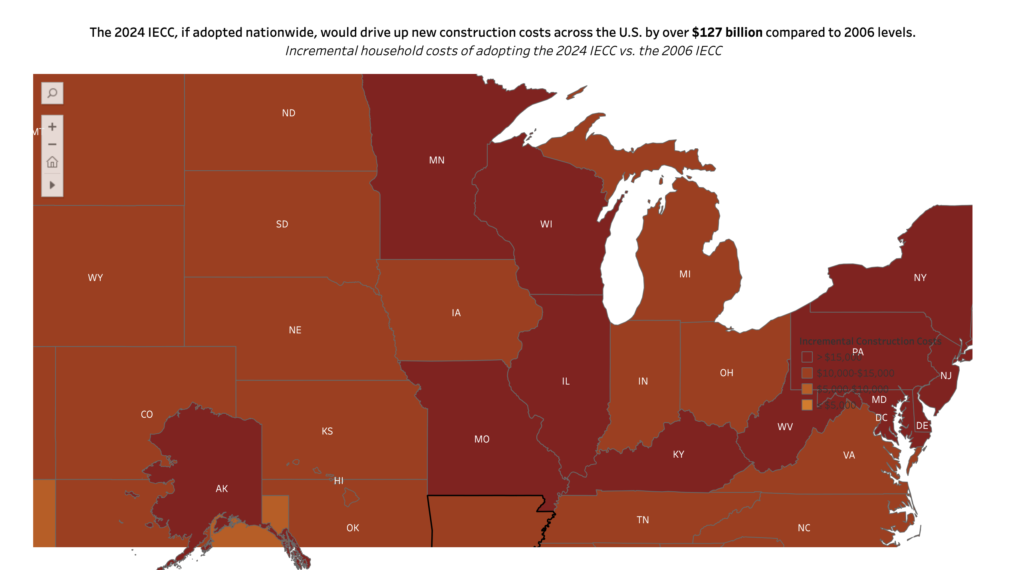
”The 2024 International Energy Conservation Code (IECC), if adopted nationwide, would drive up new construction costs for American households across the U.S. by over $127 billion compared to 2006 levels.
Currently adopted state energy codes have driven up the cost of new construction by $70 billion since 2006.
The 2024 IECC, if adopted by all U.S. states, would further drive up new construction costs by $57 billion compared to current state codes.
The U.S. Department of Energy (DOE) evaluates national and state-level impacts associated with building energy codes. Recent updates to the national model energy codes, including the IECC, come at a growing cost to American households. DOE supports consumer-friendly, fuel-neutral and lower-cost building codes with reasonable payback periods—that safeguard affordability and consumer choice.
DOE is currently reviewing the methodology by which it evaluates the cost impacts of building energy codes and how they’re developed – stakeholders are invited to comment on the Department’s Request For Information (RFI) by August 3, 2026. ” Learn More
Ten Years Later- A Tiny House Code For Wheels Spins In Limbo
I submitted more comments including an article I wrote on the 10 year history of the tiny house code that failed three times that would have added movable provisions to tiny houses.