The Great Housing Rebrand: Who Really Controls the Future of Where We Live?
In the midst of a national affordability crisis, “offsite construction” has been rebranded from factory built as the revolution that will finally fix the American housing market. The narrative is seductive: move homebuilding into the factory, lower the costs through assembly-line precision, and accelerate the supply of homes for low- and moderate-income families. However, an investigative look “under the hood” of federal research reveals a high-stakes battle for market control rather than a pure pursuit of innovation.
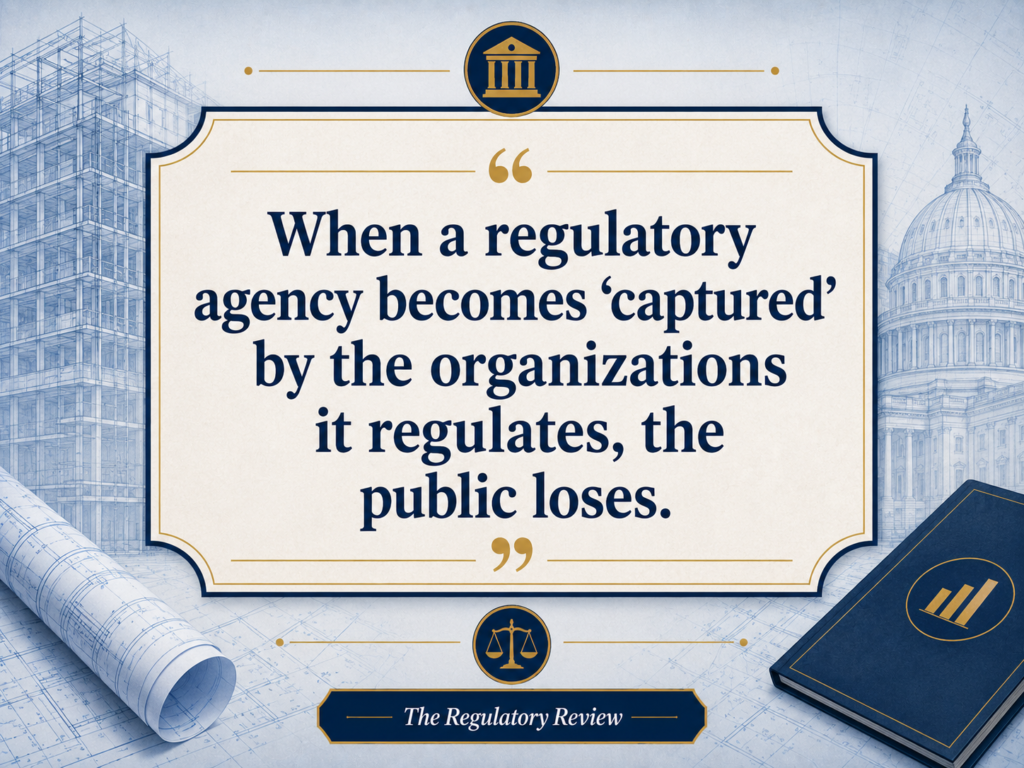
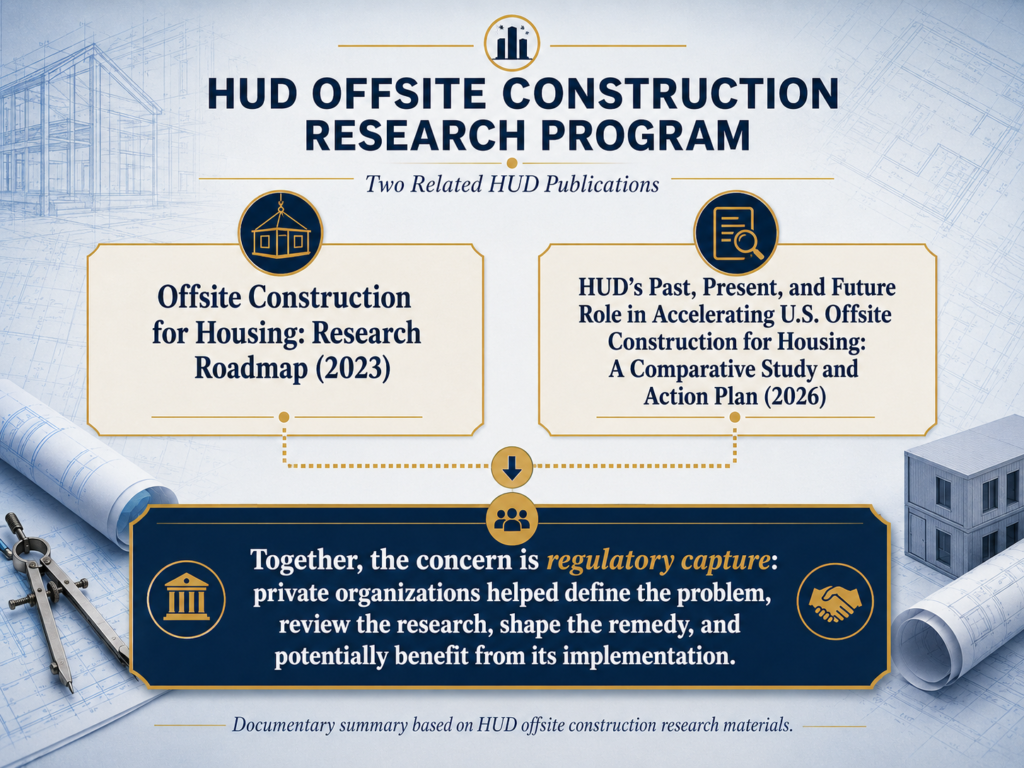
Two primary reports from the U.S. Department of Housing and Urban Development (HUD)—the HUD Offsite Construction for Housing: Research Roadmap and the HUD Past, Present, and Future Role Accelerating US Off-Site Construction For Housing Action Plan—serve as the blueprint for this shift. While these documents promise a new era of efficiency, a technical analysis of the personnel and procurement pathways reveals a coordinated effort to consolidate the regulatory infrastructure of American housing under the International Code Council, single, private, vertically integrated trade association.
The "Closed-Loop" System: When the Regulators are the Regulated
The relationship between HUD, the National Institute of Building Sciences (NIBS), and the International Code Council (ICC) has become a self-reinforcing circle that effectively bypasses competitive market forces. This is made possible by a specific statutory loophole: 12 U.S.C. §1701j–2(g)(3). This “sole-source” authority allows HUD to award contracts to NIBS without the competitive bidding usually required by federal procurement law. In the FY23 funding round, NIBS walked away with $499,878—the largest single award—to manage the very research that recommends expanding the ICC’s market reach.
- Dominic Sims: The former CEO of the International Code Council now sits on the Board of Directors of NIBS. Sims transitioned from leading the trade association to governing the entity that manages HUD’s research funding.
- David Tompos: As Executive Vice President of the ICC Conformity Assessment Group, Tompos oversees ICC-ES (Evaluation Services), IAS (Accreditation), and ICC NTA. Crucially, ICC NTA is a HUD-approved IPIA (In-Plant Inspection Agency) and DAPIA (Design Approval Primary Inspection Agency). Despite this massive conflict, Tompos served as a formal “Peer Reviewer” for the 2026 Action Plan, effectively reviewing research that critiques and proposes new business for his own divisions.
- John (JC) Hudgison: He maintains a simultaneous dual board membership, holding a senior seat on the ICC Board while serving on the NIBS Board of Directors.
Conflicts Of Interest
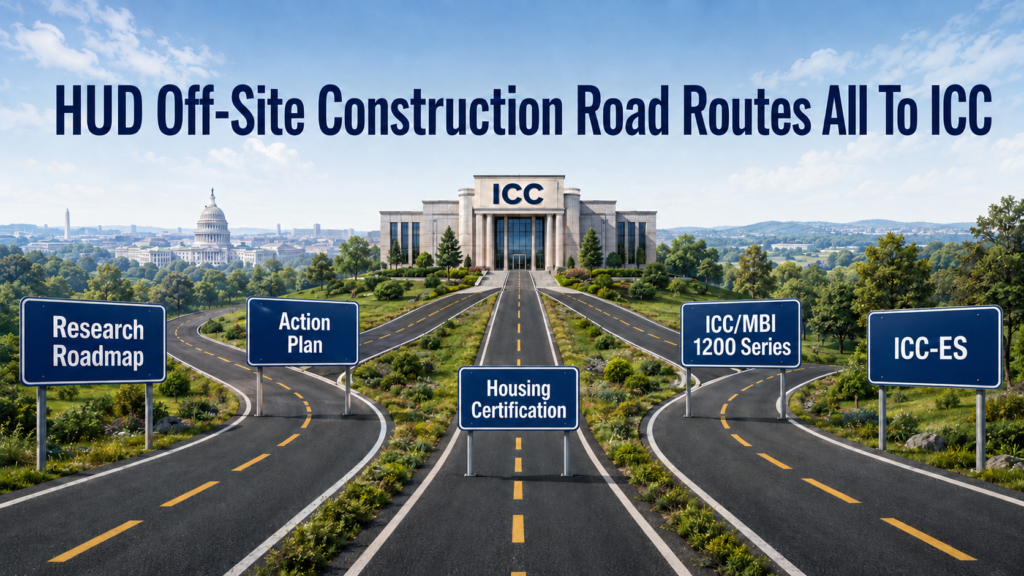
ICC References in HUD's Offsite Construction Research Roadmap
The Forgotten Ghost of "Operation Breakthrough"
- LEAP (Laboratory Evaluation and Accreditation Program): A federal program designed to accredit labs and agencies on a uniform, interstate basis.
- CES (Coordinated Evaluation System): A project that developed consistent documentation to facilitate technology acceptance across state lines.
Building Research: NBS Operation Breakthrough, Leap And ASTME541
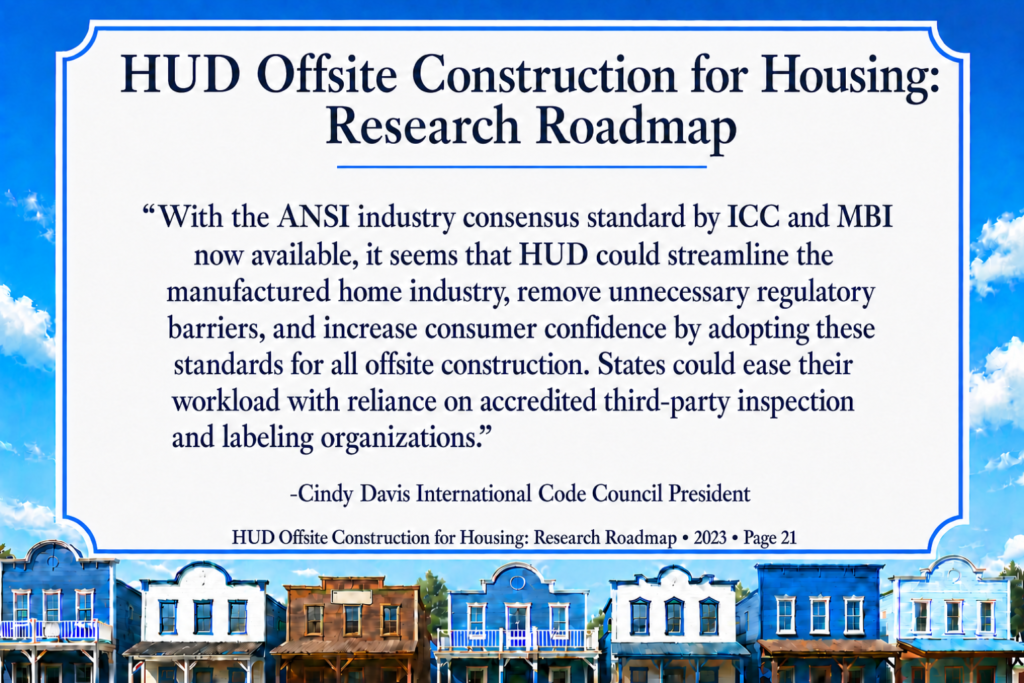
ICC Is Positioning Itself To Replace the HUD Code With ICC Codes
The following paper has a narrow focus on a quote from Cindy Davis. It also provides supporting information for readers who may not be familiar with the relevant terminology, definitions, or the HUD Code that applies to manufactured homes.

Why the quote is so crucial is because the ICC/MBI standards do NOT apply to manufactured homes. That is stated in the forward of the standards, so there is an obvious power grab being promoted to HUD from ICC that the standards would include all types of off-site housing for inspection and accreditation, but heres the rub, manufactured homes have a federal program for third party agencies that are known as IPIA and DAPIA agencies. It is the modular industry that has a patch work of different regulations. Fiddlesticks- indeed.
The ICC/MBI 1200 And 1205 Standards Were Turned Down For 2024 IBC
First Question Asked At The Hearing
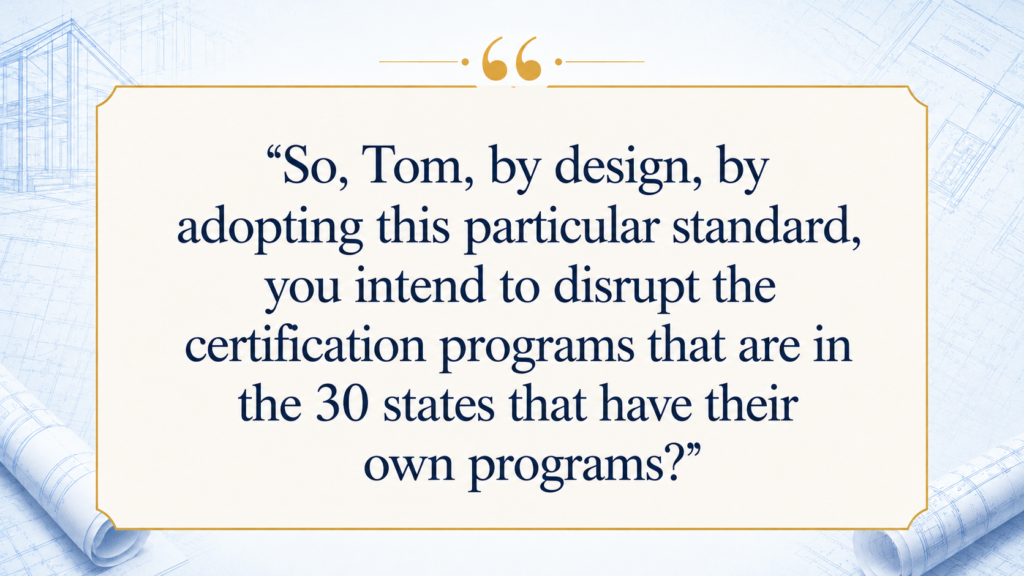
’So, Tom, by design, by adopting this particular standard, you intend to disrupt the certification programs that are in the 30 states that have their own programs? ‘’
The Head Proponent Stated The Standsards Would Not Apply To Manufactured Homes
‘‘This does not include federally regulated HUD code housing, but does include tiny homes, accessory dwelling units, modified containers, and panelized homes. This proposal will help facilitate greater use of these construction processes, which are desperately needed today given the lack of labor available, the lack of affordable housing, as well as our country’s other infrastructure needs. ”

The western theme and humor are used to make a serious and complicated issue easier to see, understand, and remember. The scenes use familiar Western imagery—townspeople, newspapers, cattle brands, and plain talk—to translate technical regulatory language into questions ordinary people would naturally ask.

The imagery of cattle rebranding also reflects the concern that factory-built housing is being rebranded as “off-site construction” for regulatory capture while established regulatory lines, consumer protections, and federal preemption may be altered underneath the new language.
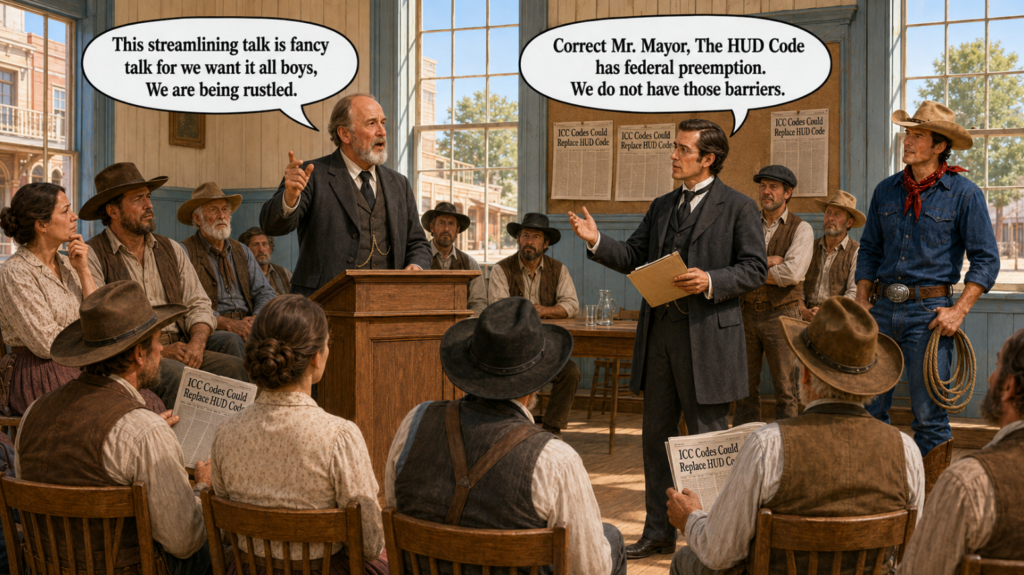
The humor is not meant to minimize the issue. It exposes the contrast between polished promises of “streamlining” and “consumer confidence” and the real consequences of changing oversight, labeling, certification, and consumer choice.

Is The Chassis Removal Of A Manufactured Home A Win For The Manufactured Home Industry Or A Stepping Stone For ICC Replacing The HUD Code?
The 21st Century ROAD to Housing Act officially removed the mandatory permanent steel chassis requirement for manufactured homes signed into law July 11, 2026.
At first glance, removing the chassis seems like a groundbreaking win for the manufactured housing industry, but I feel it has more to do with actually absorbing manufactured homes under the International Code Council (ICC) umbrella for their absolute market allocation of all housing.
We have a potential of hearing in the future that with the chassis removal and because a manufactured home is already blurring the lines and becoming more like an IRC home, why have 2 types of homes, why have a different certification path, and why not get rid of that big IBTS contract that audits third parties on behalf of HUD, when ICC already has subsidiaries that include certification, accreditation, and that ICCNTA is an IPIA DAPIA approved by the federal government.
It could take years, but in my opinion, it has already been set in motion behind closed doors for at least 8 years that I can trace starting with the 2018 ICC meeting with ICC, .NIBS, and MBI to create off-site construction standards. Why are they needed? To rebrand factory built housing to off-site construction for ICC market control with their pay to play system and possibly replace and to ‘modernize’ the HUD code.
Rebranding for Control: "Offsite Construction" vs. The HUD Code
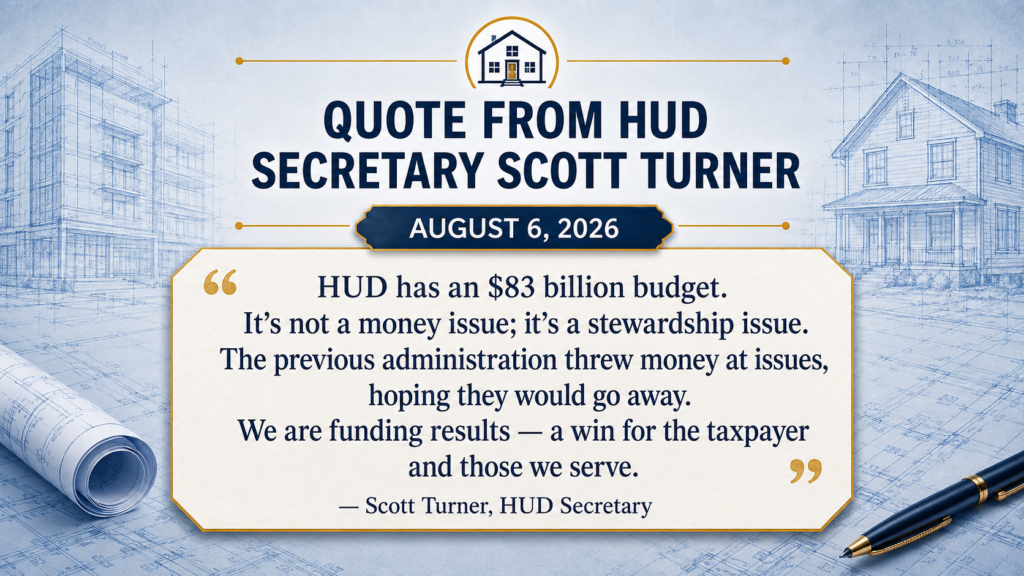
Conclusion: Stewardship or Monopoly?
An Unfolding Regulatory Convergence
There are many moving parts in the off-site construction industry involving manufactured homes and modular homes that are currently evolving at the same time. On the surface, the standards, federal research, certification systems, legislative changes, transportation issues, and financing proposals may seem separate and unrelated. What I want to propose instead is that we may be watching an unfoldment of a coordinated effort that is gradually reshaping factory-built housing—now rebranded as “off-site construction”—and changing how it is defined, regulated, certified, inspected, transported, and financed.
- ICC Board Meeting; 2018 ICC, NIBS and MBI: On July 27, 2018, the ICC Board unanimously approved a project with the National Institute of Building Sciences and the Modular Building Institute to develop standards and guidance tools for the off-site construction industry. At that same meeting, ICC leadership also discussed HUD’s move to eliminate its inspector list and rely on ICC-certified inspectors for HUD inspections.
- ICC/MBI 1200 and 1205: Those efforts led to standards covering planning, fabrication, inspection, regulatory compliance, and certification for off-site construction. Yet the standards expressly state that they do not apply to HUD manufactured housing.
- Cindy Davis and the HUD Roadmap: Despite that exclusion, Cindy Davis, then President of ICC, suggested that HUD could “streamline the manufactured home industry” by adopting ICC/MBI standards and moving toward “one simple set of construction rules (IRC and IBC)” with an ICC/MBI process in all 50 states.
- Potential ICC regulation of manufactured housing: The same HUD Roadmap separately recommended: “Investigate the relative merits of the HUD Code versus ICC codes for potential regulation of manufactured housing.”
- Housing Certification System: HUD-funded research is also promoting a broader Housing Certification System while relying heavily on ICC/MBI standards, ICC-ES evaluation pathways, NIBS, MOD X, and organizations already involved in code development, certification, accreditation, inspection, and implementation.
- ASTM E541: At the same time, ASTM E541—an existing third-party standard already used within the HUD manufactured-housing certification structure and recognized by states—is repeatedly omitted while ICC/MBI 1205 is promoted. I view that repeated omission, along with the lack of public attention surrounding ASTM E541, as part of a coordinated effort to replace an existing alternative pathway.
- Virginia provides a real example: Virginia’s December 2023 memorandum pointed agencies toward ICC/MBI 1205 without mentioning ASTM E541, even though E541 remained legally recognized. Only after the omission was challenged did Virginia clarify that ASTM E541 would also be accepted.
- The 21st Century ROAD to Housing Act requirements and the Housing Certification System: The act removed the mandatory permanent-chassis requirement from the federal definition of a manufactured home, allowing a manufactured home to be constructed with or without a permanent chassis. It also requires states to place manufactured homes without a permanent chassis in parity with manufactured homes built on a permanent chassis across financing, title, insurance, manufacture, sale, taxes, transportation, installation, and other areas. At the same time, HUD publications are promoting a Housing Certification System. These developments belong in the same overall picture because they simultaneously remove a defining physical requirement, reduce the legal distinction between chassis and non-chassis manufactured housing, and advance a new certification framework for off-site construction.
- National Modular Production Act: A separate federal proposal would authorize a study of a standardized uniform commercial code for modular homes, including standardized serialization of modules and coordination with financing incentives.
- ICC 1215 and the “ghost trailer”: At the same time, ICC 1215 advances an independent carrier concept for tiny houses and small residential units while ICC has denied the need for VINs and certification labels on the carrier, raising additional transportation and preemption concerns.
- HUD and motor-vehicle preemption: ICC’s positions on transportation and HUD preemption, combined with HUD’s failure to address complaints involving ICC and ICCNTA, add another layer to the same question: who controls the regulatory boundary between housing, transportation, certification, and inspection?
Why I Believe These Pieces Belong Together
Each development affects a different part of the same system:
- what the home is called;
- which code governs it;
- whether it must remain on a permanent chassis;
- who certifies and inspects it;
- which third-party pathway is recognized;
- how it is transported and serialized;
- how it is financed;
- and who ultimately controls access to the market.
Taken individually, these may look like separate standards, bills, meetings, research projects, and policy changes. Taken together, they appear to be reducing the distinctions between HUD Code manufactured housing, modular housing, and other forms of off-site construction while expanding an ICC-centered framework around code, certification, accreditation, inspection, and regulation.
That is why I believe we are watching an unfoldment, not a collection of unrelated events.
If the distinctions between HUD Code manufactured housing and modular housing continue to disappear, while a new Housing Certification System expands and ASTM E541 is simultaneously pushed out of view, the larger question becomes unavoidable:
Will the separate HUD manufactured-housing system eventually be portrayed as unnecessary?
August 12, 2026