DOE Seeks Comments Cost Effective Building Energy Codes
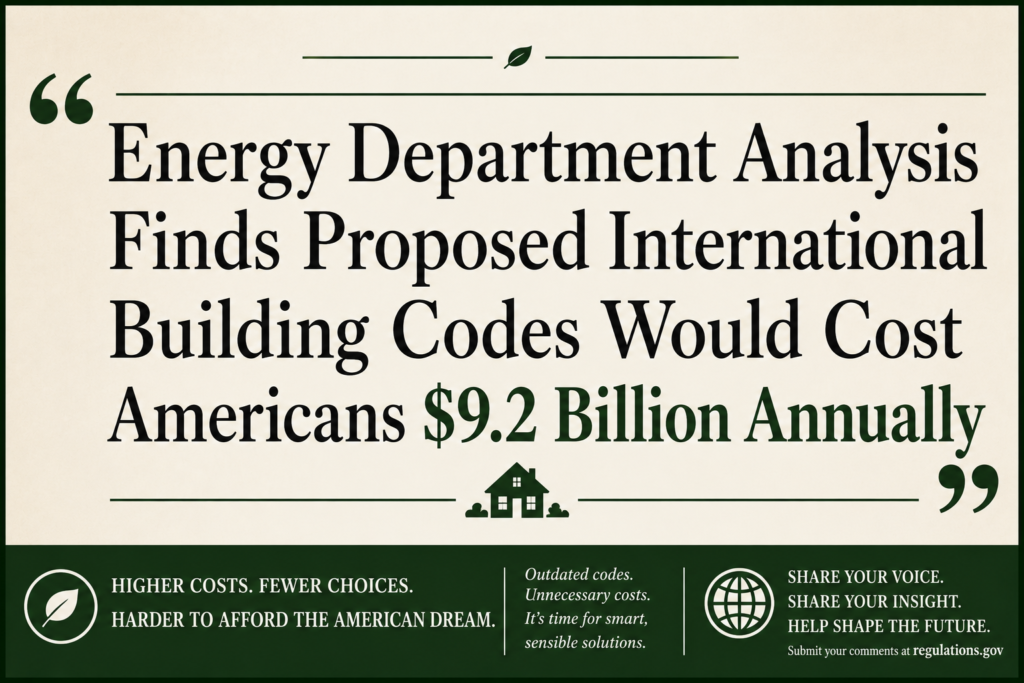
I am submitting a petition to both the Department of Energy and the Department of Justice In response to the Department Of Energy DOE requesting comments after they released a press release with new analysis finding that nationwide adoption of the 2024 International Energy Conservation Code (IECC) would significantly increase housing construction costs and burden American families with costly Green New Scam mandates.
The DOE Is Exposing The Weaponization Of Building Codes
Recent LinkedIn Post: From Assistant Secretary Of Energy Audrey Robertson
”Proud to fight for Americans and expose the weaponization of building codes pricing Americans out of homeownership… These “codes” are not about safety or baseline efficiency—they are tools that force Americans to build homes and live lives according to liberal extremists. Unelected and unaccountable “boards” are forcing the electrification of your stoves and hot water heaters, mandating inefficient heat pumps, requiring unnecessary building insulation, forcing solar hookups and EV charging… and they are just getting started.
Now the ICC is trying to force Biden’s Building Codes on every American in 2027! Currently adopted state energy codes have driven up the cost of new construction by $70 billion since 2006.
The 2024 IECC codes, if adopted by all U.S. states, would further drive up new construction costs by $57 billion compared to current state codes.
We will not stop until this corruption is exposed! We have shared the data. We have offered another path. But they have said no… so now we fight! These are the people making American homes unaffordable. President Trump and Secretary Wright will not rest until homes are affordable again. We will keep fighting for you!” This will make more sense if you read this first. DOE Seeks Comments Cost Effective Building Energy Codes.
My Petition DOE Docket No. EERE-2026-BT-BC-003
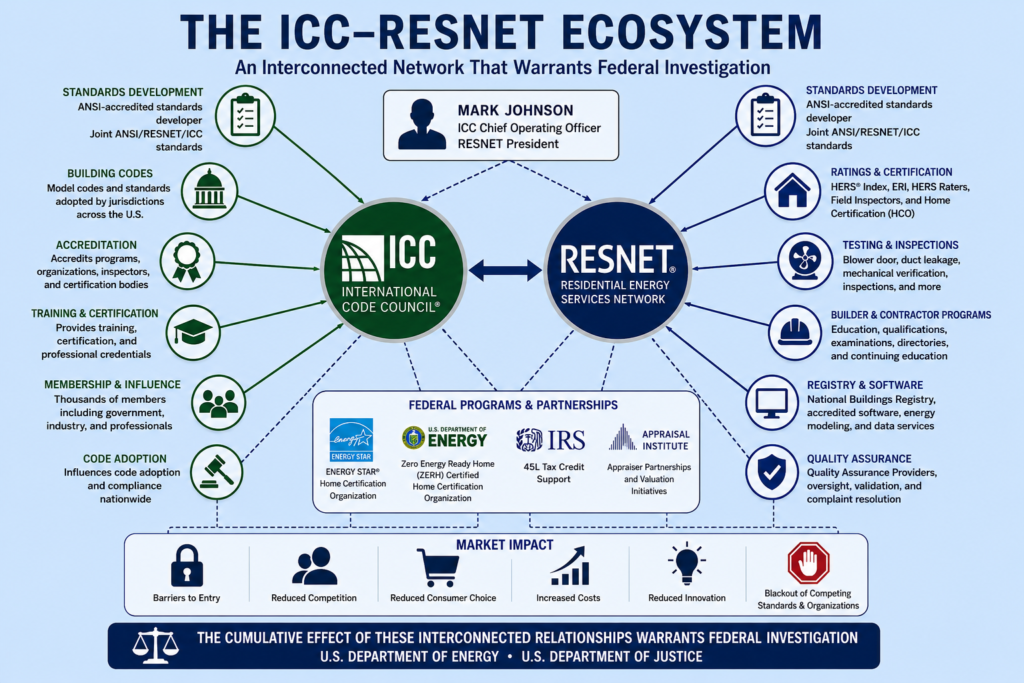
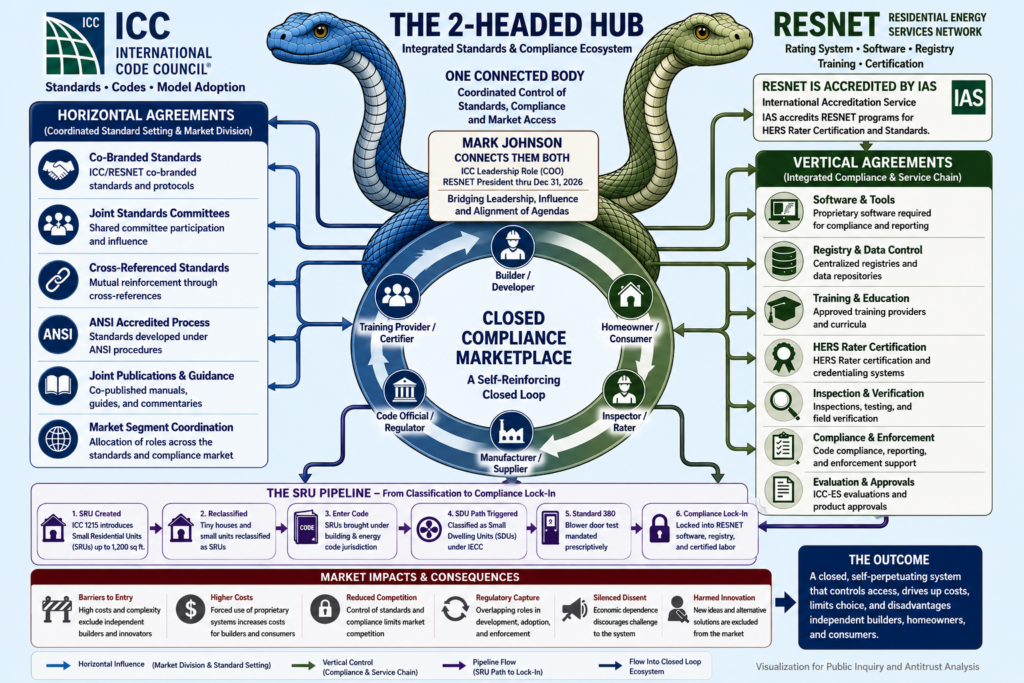
I respectfully petition the Department of Energy( DOE) and the Department of Justice to conduct a full federal investigation into the relationship between the International Code Council ICC and the Residential Energy Services Network RESNET and what I refer to as the ICC RESNET Interlocked Building Energy Requirements Ecosystem.
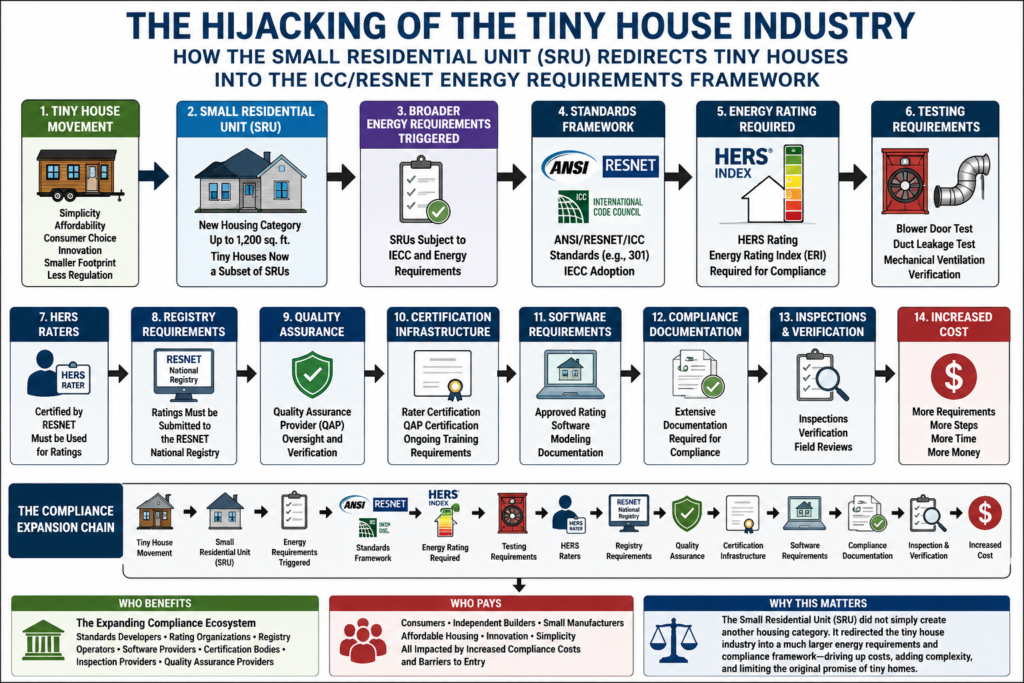
Based upon years of direct participation in national standards development, extensive independent research, and publicly available documentation, I have concluded that this interlocked ecosystem presents significant antitrust concerns and has created a hub-and-spoke organizational structure, an interlocked governance system, a closed loop compliance ecosystem, a pay-to-play marketplace, and a blackout of competing standards and competing standards organizations.
I have further concluded that this ecosystem has erected barriers to market entry, concentrated influence over building energy requirements, reduced competition, diminished consumer choice, discouraged innovation, increased compliance costs, and contributed to rising construction costs during one of the most significant housing affordability crises in American history.
One publicly disclosed example of these interlocked relationships is Mark Johnson, who serves as Chief Operating Officer of the International Code Council while simultaneously serving as President of RESNET. His dual leadership roles are one example of the interconnected relationships presented throughout this petition.
This petition requests that DOE and DOJ investigate the cumulative effect of these interlocked relationships across standards development, building energy requirements, accreditation, certification, HERS Rater programs, registry services, proprietary software, inspections, conformity assessment, training, code implementation, and related compliance activities affecting both the residential and commercial building sectors
RESNET is not simply a home energy rating organization. RESNET develops and maintains the HERS Index, administers the National Registry, certifies HERS Raters and Quality Assurance Providers, and maintains quality assurance, training, and certification programs built around joint ANSI/RESNET/ICC standards. RESNET incorporates these joint standards throughout its HERS rating system, registry, certification, training, and quality assurance infrastructure.
The International Code Council is not simply a model code developer. Through its Family of Solutions, ICC participates in standards development, accreditation, product evaluation, certification, inspection, engineering, digital code distribution, training, and conformity assessment. Together, ICC and RESNET occupy interconnected roles throughout the building energy requirements ecosystem, influencing multiple stages of standards development, compliance, certification, and implementation across both the residential and commercial building sectors.
Both the International Code Council (ICC) and the Residential Energy Services Network (RESNET) are ANSI-accredited standards developers.
Why This Investigation Is Needed
On June 26, 2026, the U.S. Department of Energy concluded that nationwide adoption of the 2024 International Energy Conservation Code (IECC) could:
Increase residential construction costs by $9.2 billion annually.
Add more than $127 billion in cumulative construction costs.
Increase the cost of a typical new home by up to $14,000.
Reduce consumer choice.
Create unnecessary regulatory burdens.
Produce lengthy payback periods.
Increase housing costs with little corresponding benefit.
DOE further called upon standards developers to prioritize:
Affordability.
Transparency.
Consumer choice.
Fuel-neutral energy efficiency.
Removal of unnecessary regulatory barriers.
I respectfully submit that these concerns warrant a broader federal investigation into the organizations, relationships, governance, and market structure influencing building energy requirements throughout the United States.
Matters Requested for Investigation
I respectfully request that DOE and DOJ investigate whether the ICC RESNET Interlocked Building Energy Requirements Ecosystem has created or contributed to:
A hub-and-spoke organizational structure.
Interlocking leadership and governance.
A closed-loop compliance ecosystem.
A pay-to-play marketplace.
A blackout of competing standards and competing standards organizations.
Significant antitrust concerns.
Barriers to market entry.
Suppression of competition.
Reduced consumer choice.
Reduced innovation.
Increased compliance costs.
Increased construction costs.
Increased housing costs.
Concentrated influence over building energy requirements.
Concentrated influence over standards development.
Concentrated influence over accreditation.
Concentrated influence over certification.
Concentrated influence over HERS Rater programs.
Concentrated influence over proprietary software.
Concentrated influence over registry services.
Concentrated influence over inspections.
Concentrated influence over conformity assessment.
Concentrated influence over training.
Concentrated influence over code implementation.
Scope of the Investigation
Scope of the Investigation
This petition concerns the broader building energy requirements ecosystem affecting both residential and commercial buildings.
The investigation requested includes, but is not limited to:
Organizational relationships.
Leadership interlocks.
Governance.
Standards development.
Building energy requirements.
Accreditation.
Certification.
HERS Rater programs.
Registry services.
Proprietary software.
Inspection services.
Conformity assessment.
Training.
Product evaluation.
Code implementation.
Horizontal relationships.
Vertical integration.
Market concentration.
Competition.
Consumer choice.
Barriers to entry.
Housing affordability.
Construction costs.
ICC And ASTM Tiny House Committee
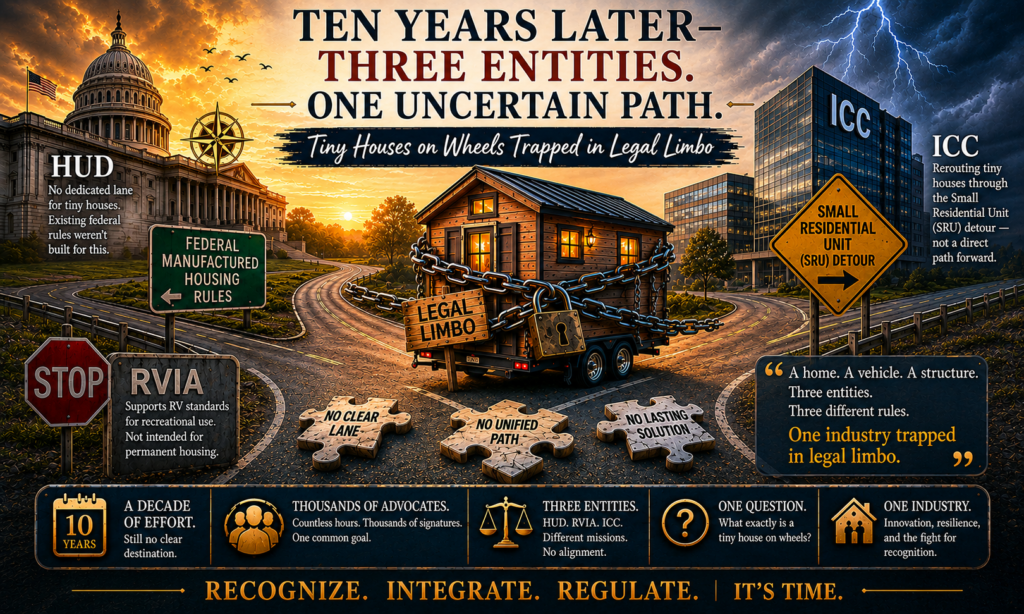
I personally set up a collaboration with ICC and ASTM for tiny houses with Mark Johnson, the ASTM/ICC liaison and ICC staff member in the exploratory stage with ASTM.
ICC did not honor the collaboration at a later date, caused a ONE YEAR long delay with false claims of duplication and misleading facts, and then duplicated the ASTM effort in violation of ANSI and WTO Coherence Duplication.
ICC declared that ASTM could NOT develop a standard, based on the HUD secretary, it had to be a code, then ICC turned around, and announced they were developing a tiny house standard, and then the codefailed again for the 3rd time in ten years that would have added movable provisions for tiny houses.
I respectfully request that the U.S. Department of Energy and the U.S. Department of Justice conduct a comprehensive federal investigation into the ICC RESNET Interlocked Building Energy Requirements Ecosystem and determine whether its organizational relationships, leadership interlocks, governance structure, and market influence have contributed to anticompetitive conditions, a blackout of competing standards, barriers to market entry, reduced competition, diminished consumer choice, increased construction costs, and higher housing costs.
America cannot solve its housing affordability crisis without open competition, transparency, innovation, and meaningful consumer choice.
I respectfully request that DOE and DOJ determine whether structural reforms are necessary to restore competition, transparency, affordability, innovation, and consumer choice throughout the building energy requirements ecosystem, including code and standard development.
Respectfully submitted, Janet Thome President Tiny House Alliance USA ja***@******************sa.org
Author's Disclaimer
I was a proponent who spearheaded the tiny-house effort within ASTM, working collaboratively to establish the E06.26 Tiny Houses Subcommittee under the Committee on Performance of Buildings. I currently serve as Membership Secretary for the subcommittee.
Disclaimer: I do not represent ASTM International, and the views, findings, and conclusions expressed in this document are my own, based on my own experience, experience, public information and independent research. This submission is made in my individual capacity as President of Tiny House Alliance USA, in support of transparency, lawful compliance, and open participation in standards development.
RESNET® Launches Program for Modern Manufactured Homes
There is concern that manufactured homes are becoming too much like an IRC home. It certainly does seem to be going in that direction. Before long, there will be no need for both types
Program brings energy-performance ratings to the nation’s largest source of unsubsidized affordable housing and RESNET is now enrolling Rating Providers
RESNET is launching a Rating Program for new Modern Manufactured Housing that, for the first time, makes HERS® Ratings available for new, modern manufactured homes. The program quantifies a home’s energy efficiency on the HERS Index giving manufacturers, buyers, and lenders a transparent, apples-to-apples comparison between manufactured and site-built housing.
Manufactured housing is the largest source of unsubsidized affordable housing in the country, with roughly 100,000 new homes produced each year. Yet until now, these homes have not received a HERS Rating when built. RESNET developed this program to keep energy performance and affordable operating costs within reach for the households that need it most. Learn More
Related Blog Post
DOE Seeks Comments Cost Effective Building Energy Codes
Putting Homeowners First And How They Want To Power Their Homes
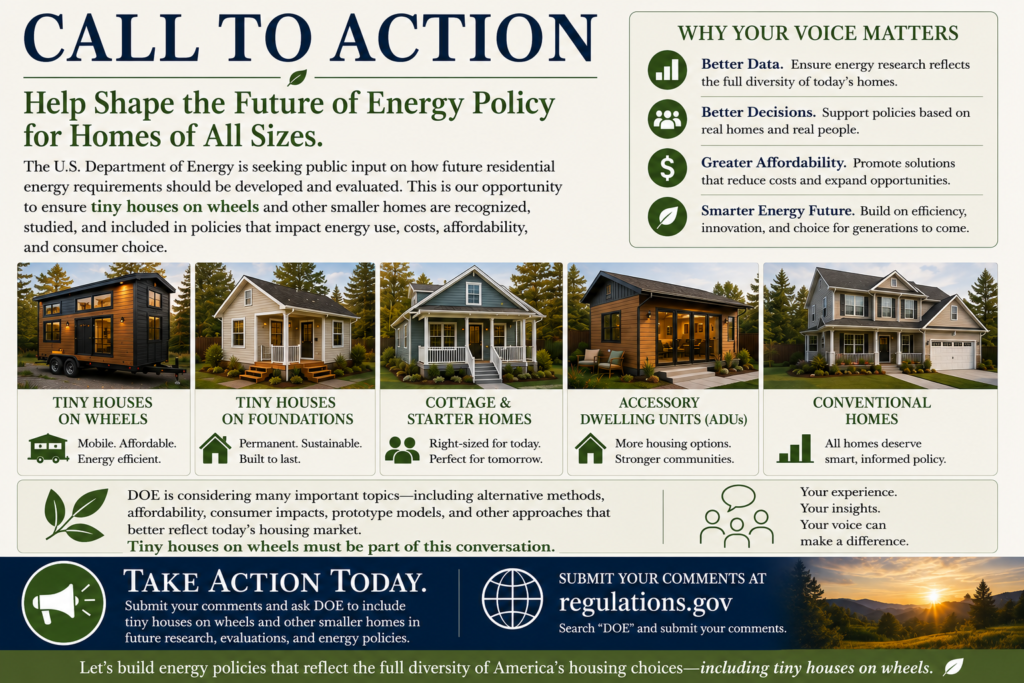
The U.S. Department of Energy is seeking public comments on how future residential energy requirements should be evaluated. This is an important opportunity for the tiny house community to help shape the future of energy policy by encouraging DOE to recognize the unique characteristics of tiny houses on wheels, tiny houses on permanent foundations, and other smaller homes. DOE is requesting input on a wide range of topics, including alternative compliance methods, affordability, consumer impacts, residential prototype models, and other approaches that better reflect today’s evolving housing market.
Tiny houses on wheels have too often been overlooked in national energy policy discussions, despite representing one of America’s most innovative, affordable, and energy-conscious housing options. This is our opportunity to encourage DOE to include tiny houses on wheels in future research, residential prototype models, and energy policy discussions so that future requirements reflect the realities of smaller homes. If you own, build, design, or support tiny houses, I encourage you to submit comments. Together, we can help ensure that tiny houses on wheels are recognized as an important part of America’s housing future while preserving affordability, innovation, and consumer choice.