Much Needed Comic Relief : A Pause From The Battle For Tiny Houses
This blog post is centered around the International Code Council ICC/THIA 1215 tiny house standard written with much needed humor to lighten the heaviness and stress of the issues I will present. The blog post includes a short satire video explainer and the tale of The Little House In The Desert -A Wagon That Leaves No Tracks – A Western Satire Tale Of Tiny House Swindlin’, Rustled By Free-Wheelin’, Backdoor Dealin’Small Residential Unit Rich Barons written in a spaghetti western theme depicting the Wild Wild West, sprinkled with lots of satire.
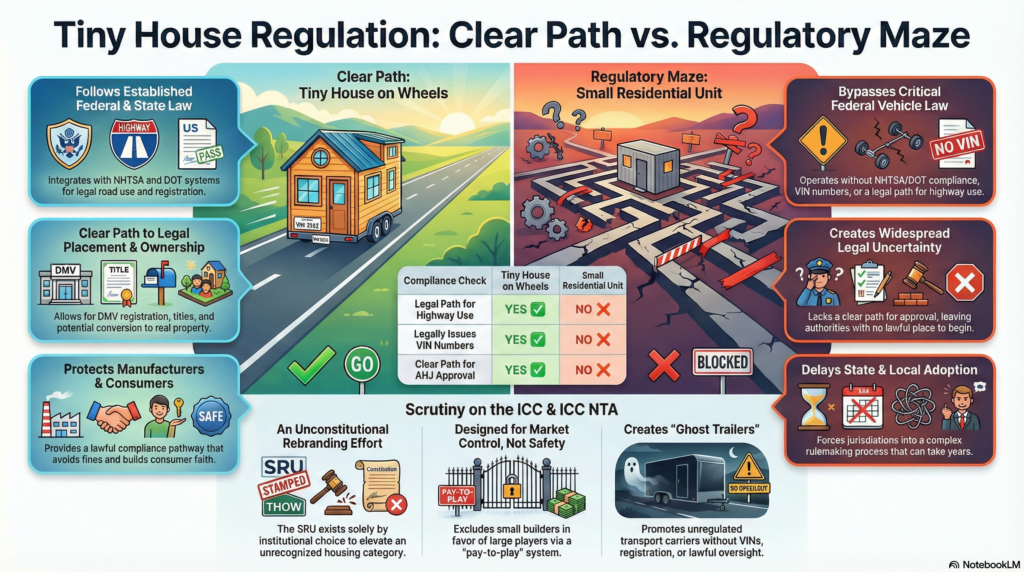
I will add relevant blog posts at the end if you need to get caught up on the main issues including how the standard was hijacked by the small residential unit and how ICC is disregarding and ignoring motor vehicle and HUD preemption and the very path that could lead tiny houses on wheels to compliance for mortgages and legal placement. ICC is purposely rerouting tiny houses through the small residential unit detour that will stifle the industry. The result is a “ghost trailer”—a structure that moves through jurisdictions without being regulated as a motor vehicle or as a manufactured home, without a VIN, without registration at the DMV, and without a title.
The small residential unit, is arbitrary and unconstitutional, a whim of ICC, and has nothing to do with structural integrity, life and fire safety or for consumer protection for tiny houses.
This strategic move will cause a regulatory reset, squeeze out small artisan builders in favor of BIG Players in the industry. The reset will cause a slow adoption of a 50 state patchwork of different regulations, exactly what preemption is in place to prevent for their market control and domination with the strategy of rebranding tiny houses.
Original Satire Song: The Little House In The Desert- A Satire Tale Of Tiny House Swindlin'
For The Back Story And A Steel Man Analysis Of The Small Residential Unit
If you are new to this issue, you might want to read a blog post with a serious tone before you dive into this satire post.
Honey, That Word ''Tiny House'' Just Inflamed Everyone
So we rebranded it-after me. Yours truly
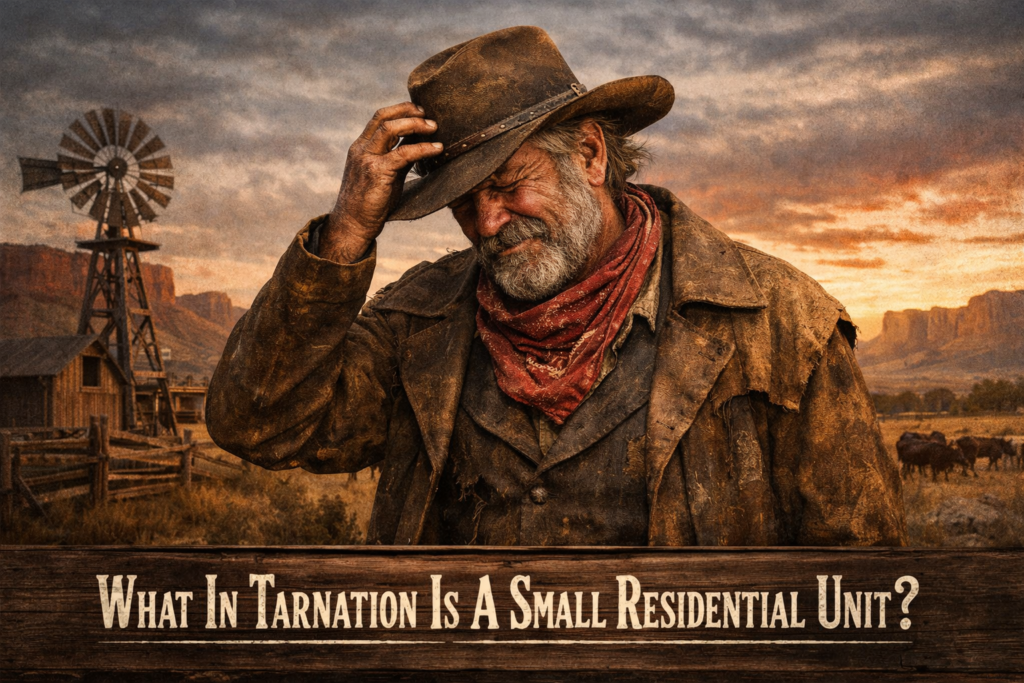
Over time, however, the focus shifted. What began as a tiny house standard has increasingly centered on the newly framed concept of the “small residential unit,” changing both the scope and the implications of the document.
Standard Definition: SMALL RESIDENTIAL UNIT (SRU). A dwelling that is 1200 square feet (111 m2) or less excluding lofts and is constructed as a permanent residential structure with or without a permanent chassis.
IRC Definition: TINY HOUSE. A SMALL RESIDENTIAL UNIT that is 400 square feet (37 m2) or less excluding lofts.
There has been a great debate in the OSMTH 1215 committee regarding the Small Residential Unit takeover of the standard which is the agenda of ICC.
They have positioned the Small Residential Unit, a made up term that is not used by anyone and is not enforceable over Tiny Houses, a codified term in the IRC, making Tiny Houses a subcategory under the Small Residential Unit.
The core issue is not innovation, but omission. The standard avoids directly addressing existing federal motor vehicle safety requirements and federal HUD manufactured housing preemption that may apply to chassis-based, transportable dwellings. By remaining silent on these federal authorities, the standard leaves states, local officials, builders, and homeowners to navigate conflicts that should have been clearly resolved at the outset.
Rebranding to "Own" the New Category
Standard developers and dominant industry players often use rebranding not just for marketing, but as a strategic maneuver to redefine an industry in their own image, thereby establishing or cementing a monopoly. By controlling the narrative, language, and standards of an industry, they make it difficult for competitors to enter, while presenting themselves as the “trusted,” “modern,” or “only” option.
This is a very serious matter with real legal and safety consequences. What follows uses spaghetti-western humor as comic relief to tell the story of a standard built on silence—where bar room brawls replace answers, pale riders ride at dawn, and a reckoning between the good, the bad, and the ugly.
The Small Residential Unit Rode Into Town On Fire
Ablaze With Charm Trailing Like Gun Smoke
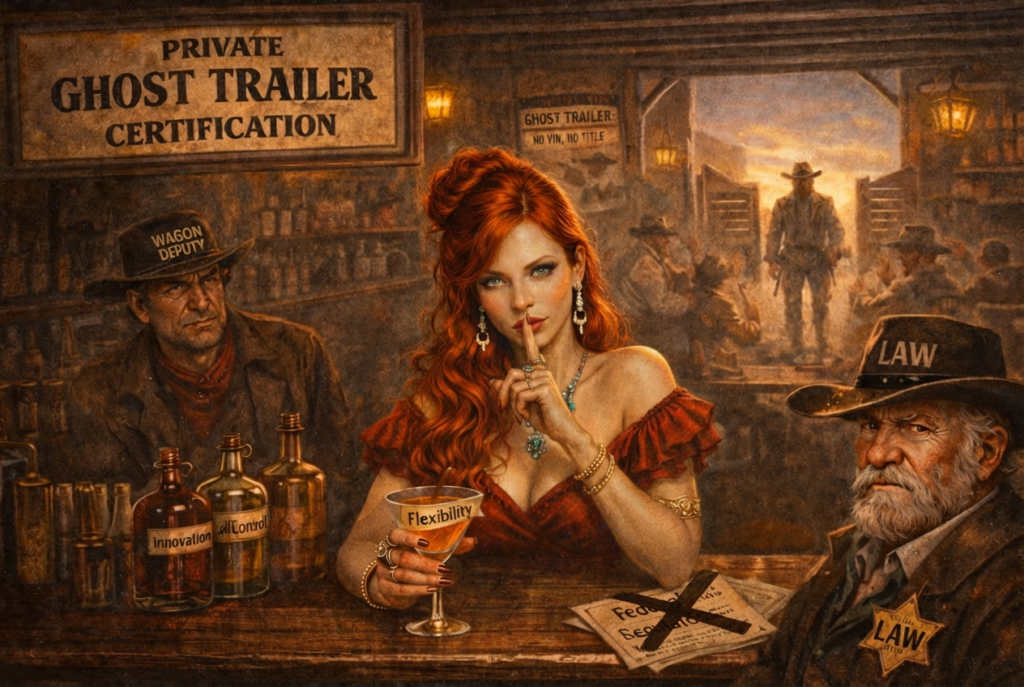
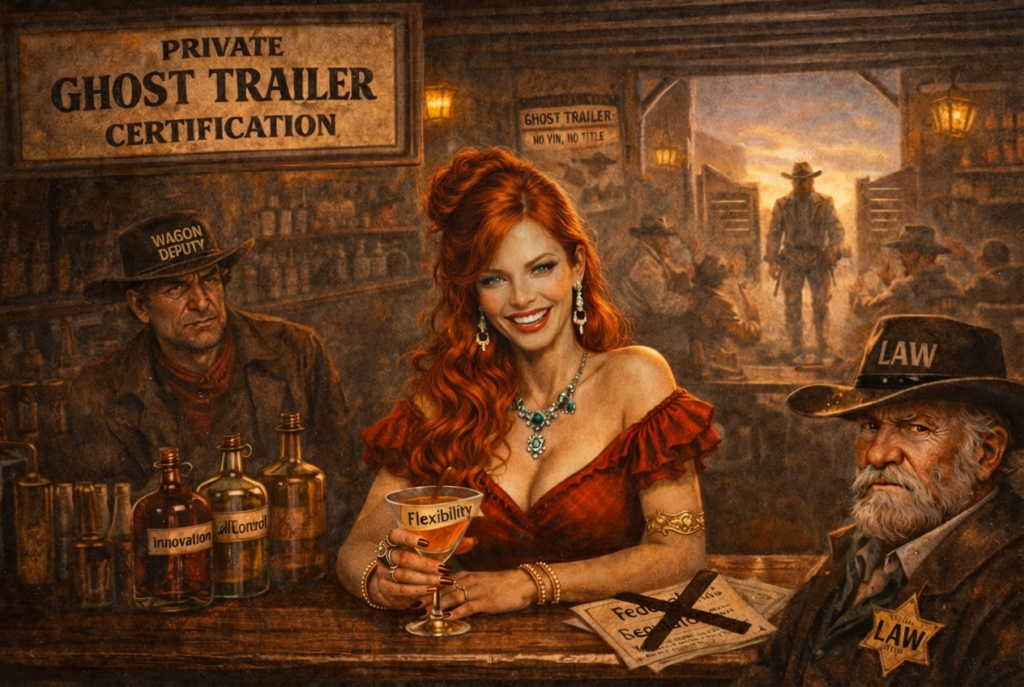
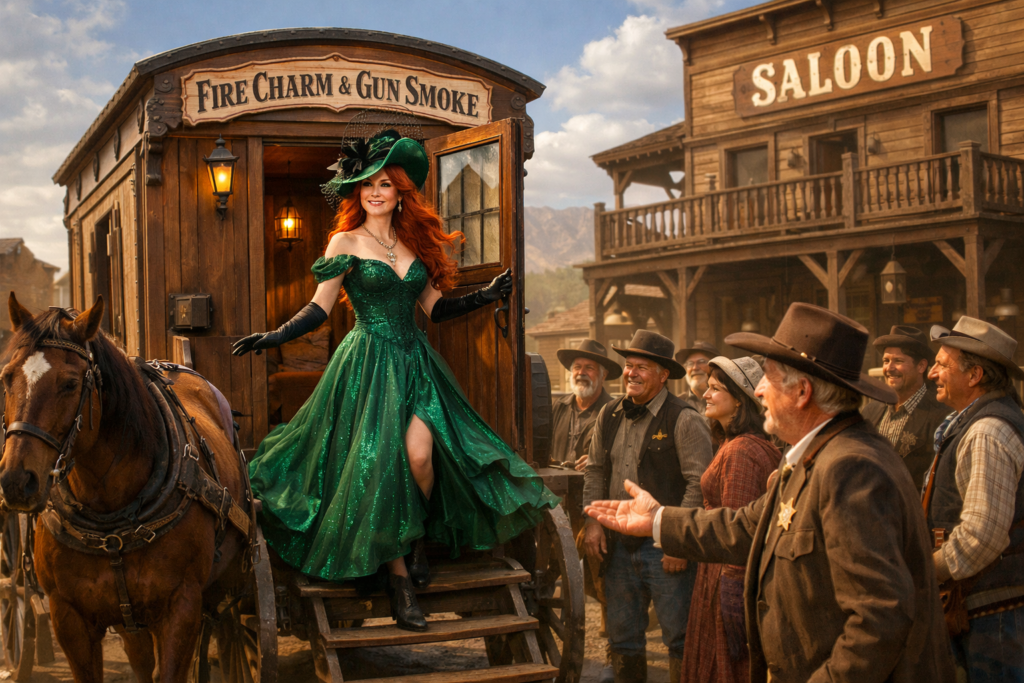
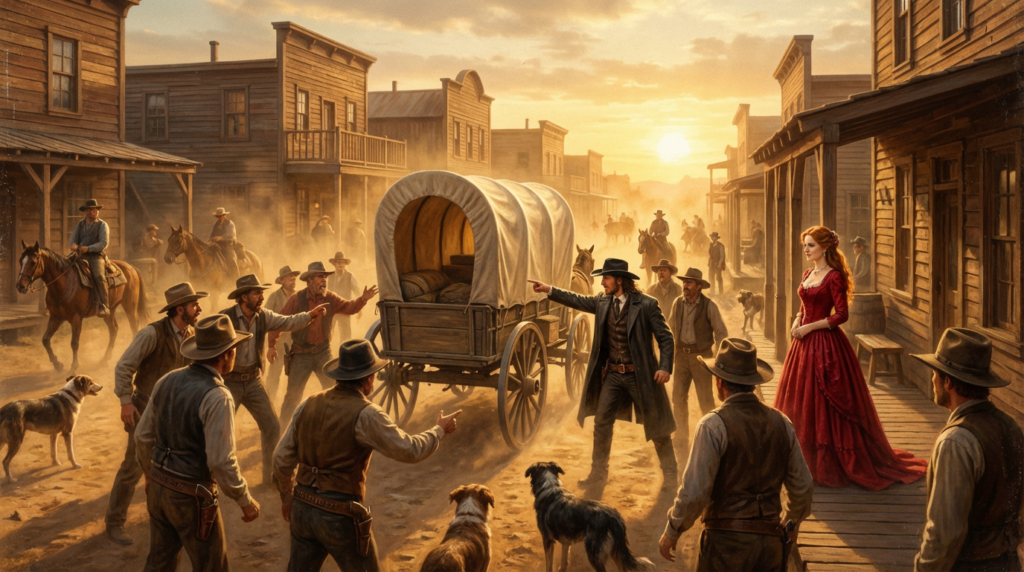
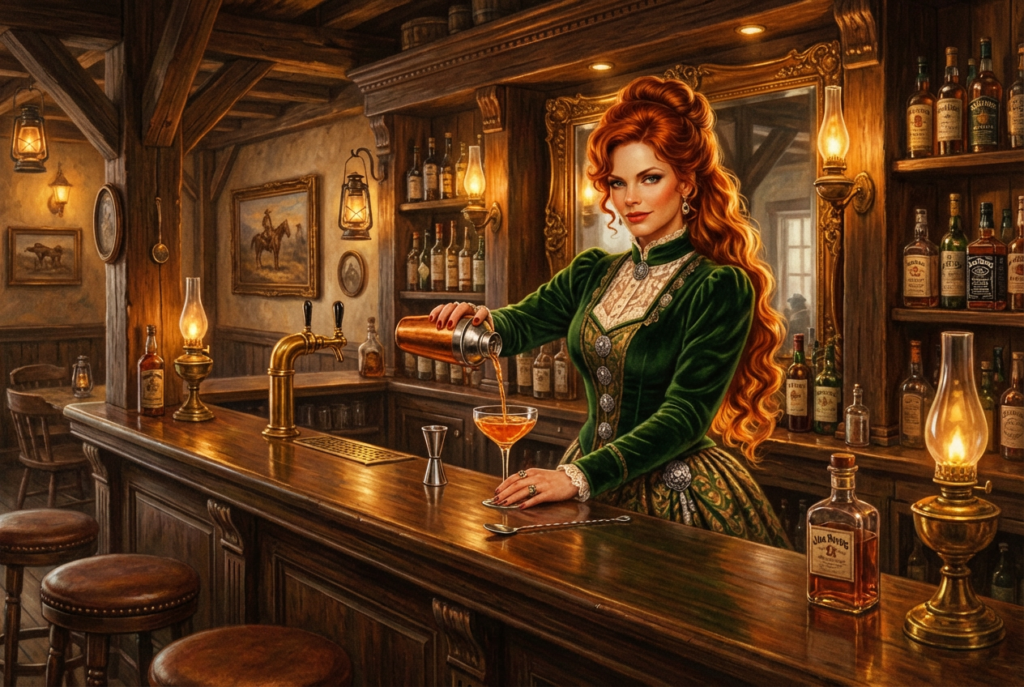
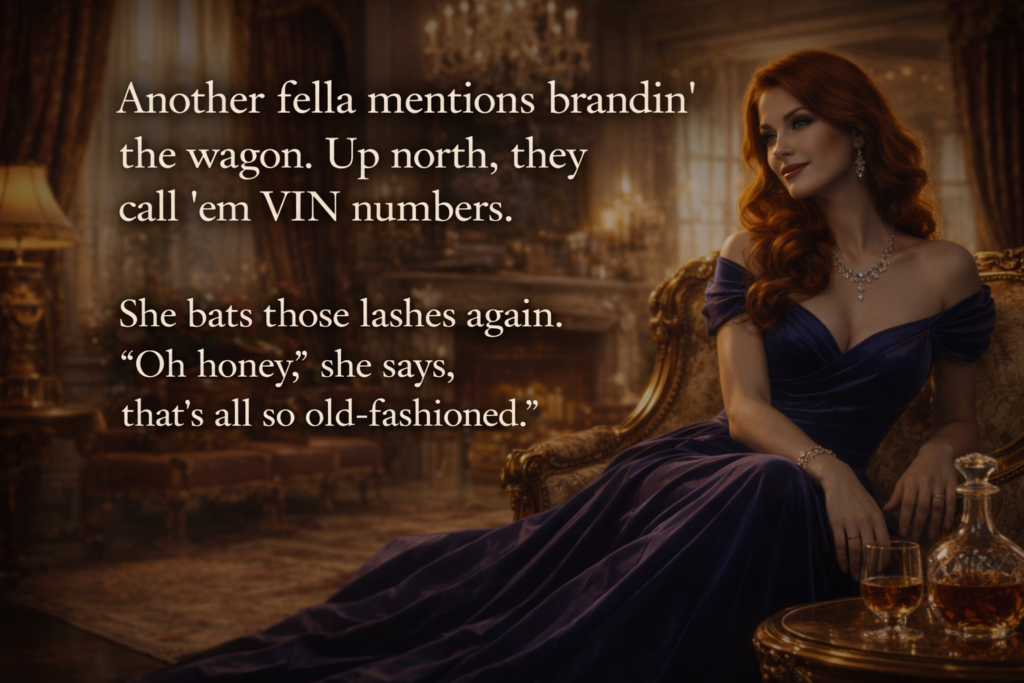
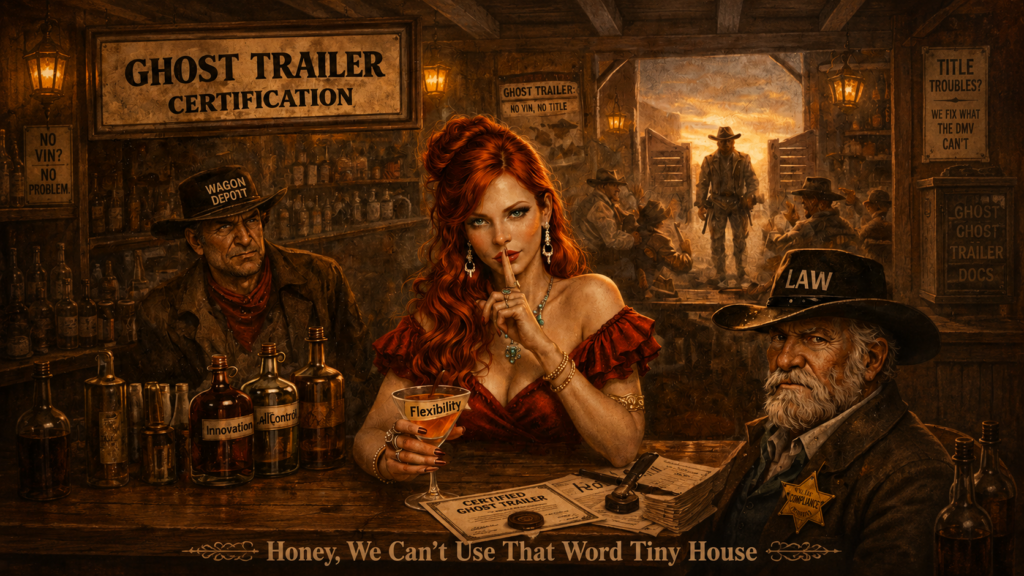
The Small Residential Unit rode into town on fire ablaze with charm trailing like gun smoke. A gorgeous redhead with dazzling blue eyes, fluttering lashes, and jewelry that jingled louder than a spur on hardwood
Intro
She didn’t knock—she arrived. Every man’s dream, every regulator’s headache, and every wife’s immediate suspicion.
She leaned on the bar like she owned the deed, smiled like she knew the ending, and promised everyone exactly what they wanted to hear: flexibility without responsibility, progress without paperwork, and certainty without asking who was in charge. Behind her, the wagon that brought her in quietly unhitched itself and pretended it had always been part of the scenery. No ruts. No receipts. Just a new name, a better dress, and a town suddenly too distracted to remember how anything used to work.
The Little House In The Desert -A Wagon That Leaves No Tracks
Rustled by Free-Wheelin’, Back-Door Dealin’ Small Residential Unit Rich Barons
The Video Includes A Video Explainer Of The Blog Post
Boots On-Grab Your Whiskey. Sweet Tea’s On The House
The Little House In The Desert - The Wagon That Leaves No Tracks
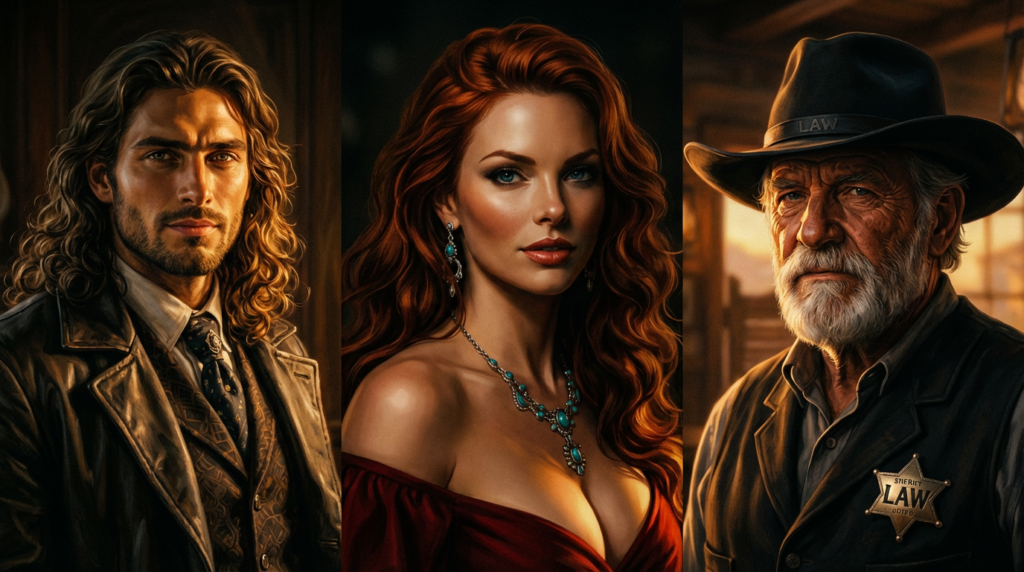
All Star Cast: Starring
Handsome Joe
Red
Butch
The Pale Rider
The Small Residential Unit
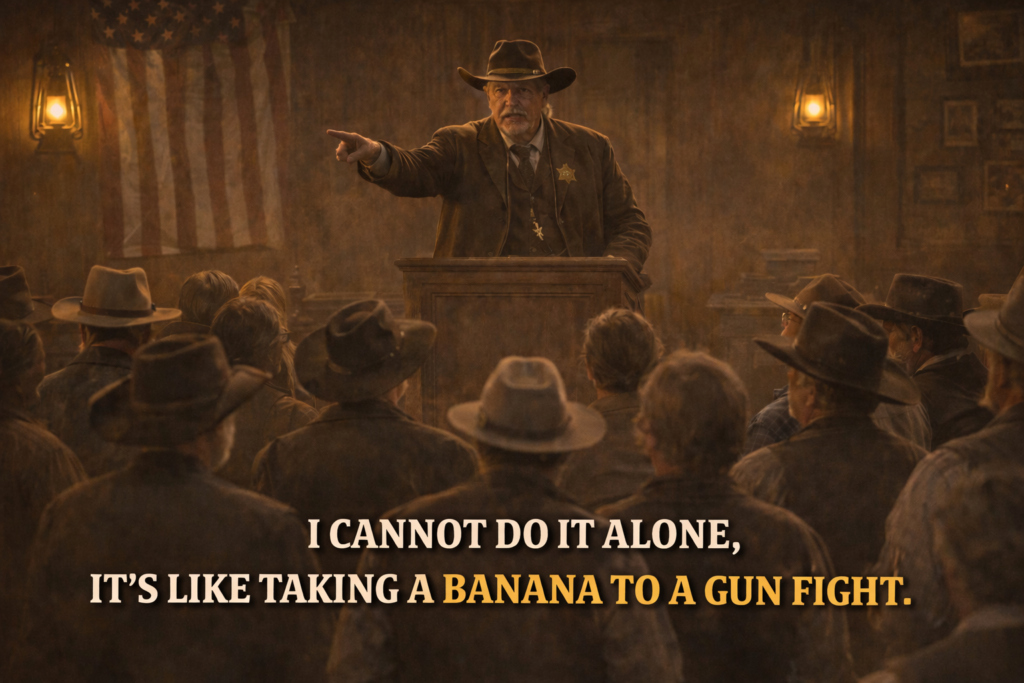
The Sheriff
Based On A True Story
They say you can tell a lot about a town by what it won’t talk about.
Out here, the dust hangs heavy. Tumbleweeds cross Main Street like they’re on payroll. And if you listen real close, you can hear the soft, shameful rattle of broken axles being dragged just beyond the horizon.
Welcome to Little House in the Desert—The Wagon That Needs No Tracks a place where homes are meant to stay put, wagons are meant to travel, and one thing in particular decided it could be both, depending on who happened to be asking.
When Silence Rode In
The trailer rolled through town at dusk.
Not pulled by horses—pulled by horsepower. It came down public roads wearing all the usual transportation jewelry: axles, brakes, lights, safety chains, reflectors flashing like a badge it hadn’t earned.
It wheezed like an overworked mule.
One axle bent. Another screamed. A hubcap popped loose and rolled into the sagebrush, smart enough to disappear before anyone started asking questions.
The transportation folks squinted. “Yep. That’s a vehicle.”
The housing folks adjusted their hats. “Careful.”
Then the wagon stopped.
And the moment it stopped moving— the trail faded.
No ruts. No records. No memory of how it got there.
Just dust over the tracks and a collective agreement to move on.
Gunsmoke: Smoke, Mirrors, and the Silence Strategy
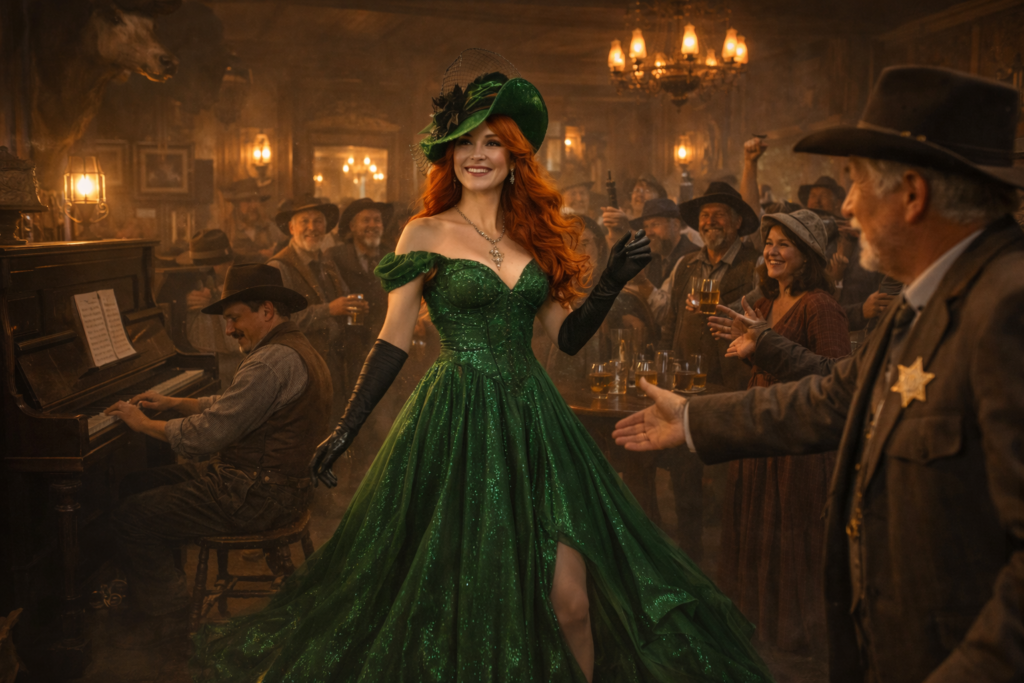
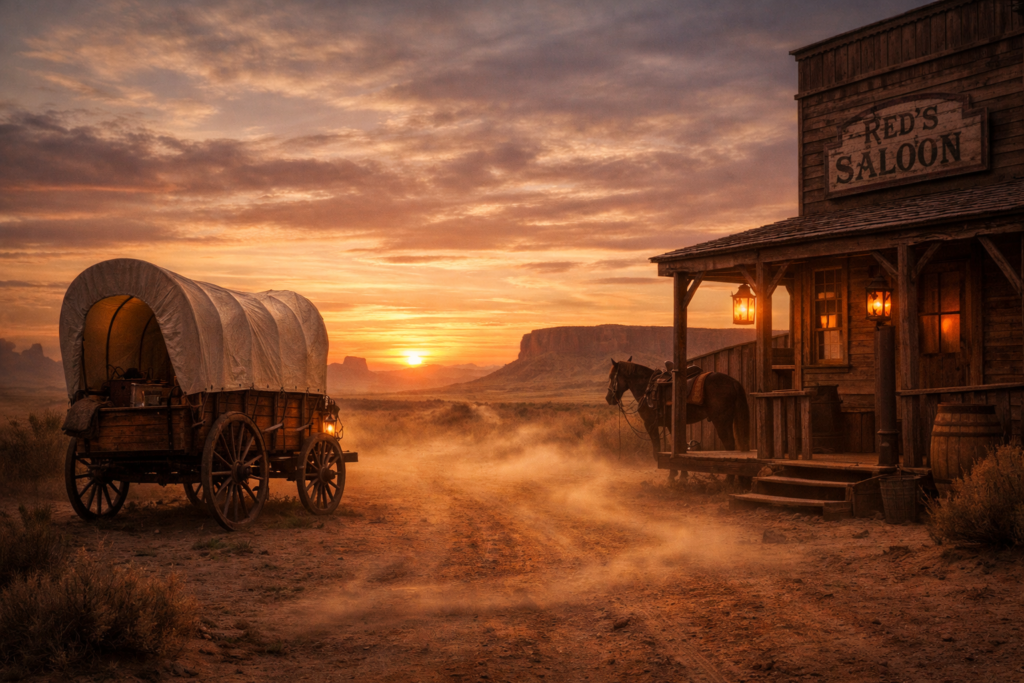
Every western has a saloon.
In this one, the piano never stops playing.
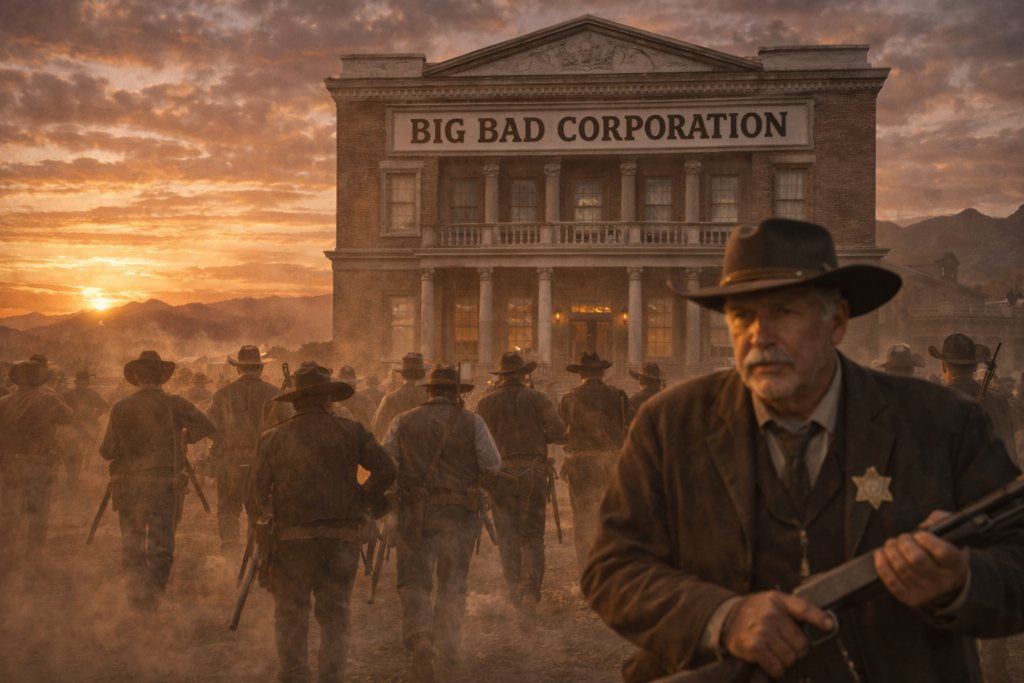
The piano player? That’s the Big BAD Corporation. Every town has one.
They don’t draw guns. They don’t throw punches. They don’t say who’s right.
They just keep playing while the room fills with smoke and mirrors.
Someone asks: “Is it transportation?”
🎹 plink plink “We don’t interpret federal law.”
Another voice: “DOT? NHTSA? FMVSS?”
🎹 plink plonk “We’re just a standards body.”
Someone braver: “HUD? Preemption?”
🎹 plink plink “NAH, we write our own rules”.
That’s the silence strategy.
Because in this town, saying nothing is faster than a quick draw—and leaves fewer fingerprints.
The Wagon That Left No Ruts
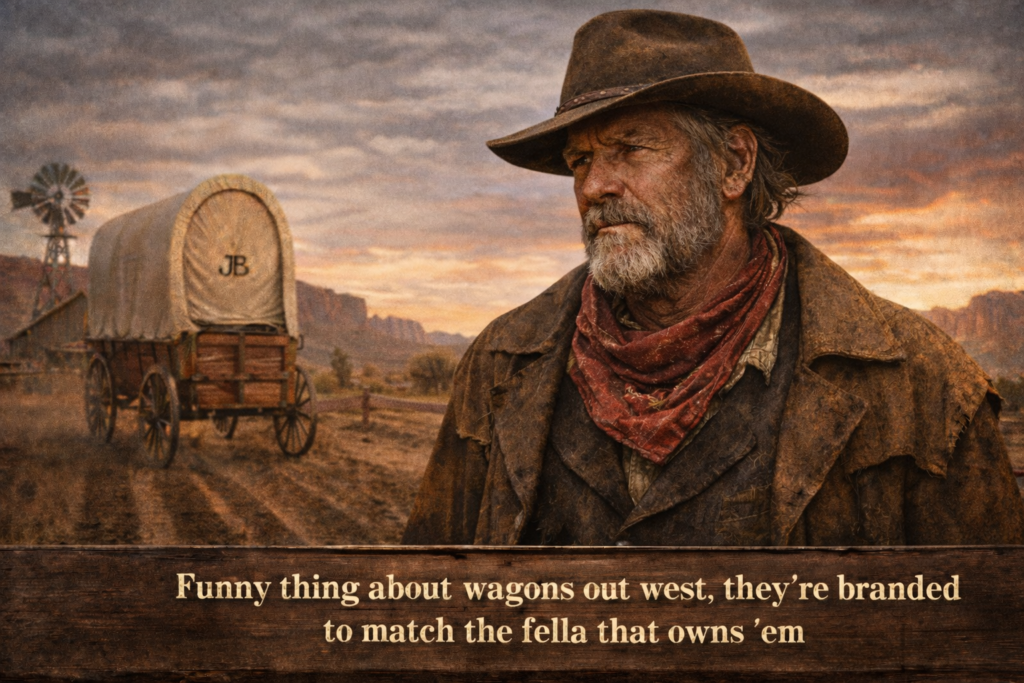
Funny thing about wagons out west: they’re branded to match the fella that owns ’em
Not this one.
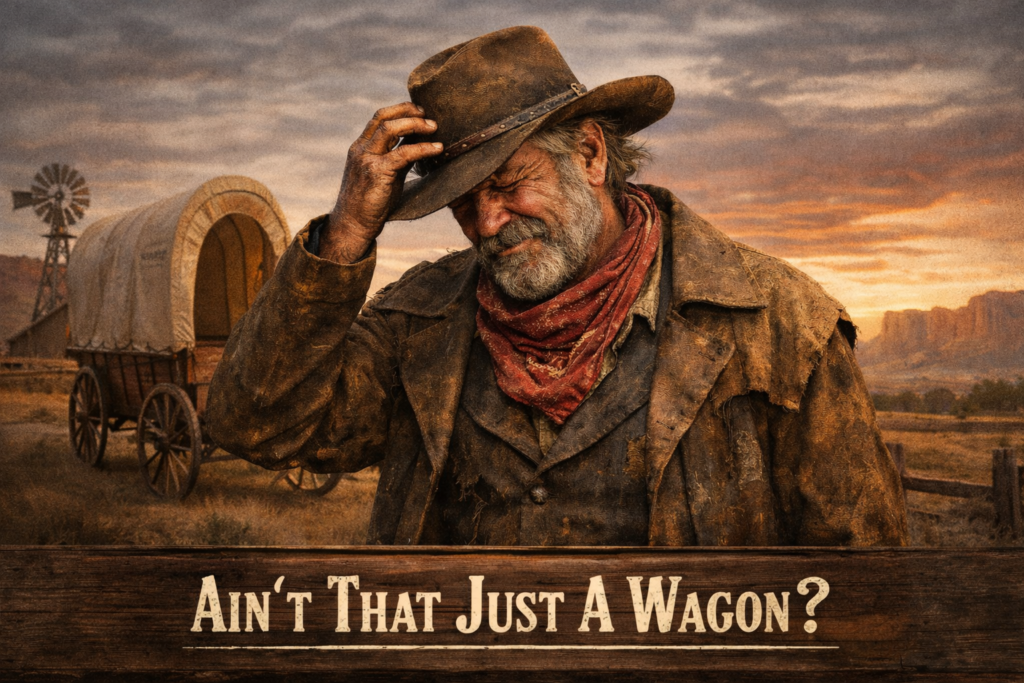
Same chassis. Same axles. Same road scars hidden under fresh paint and a new name.
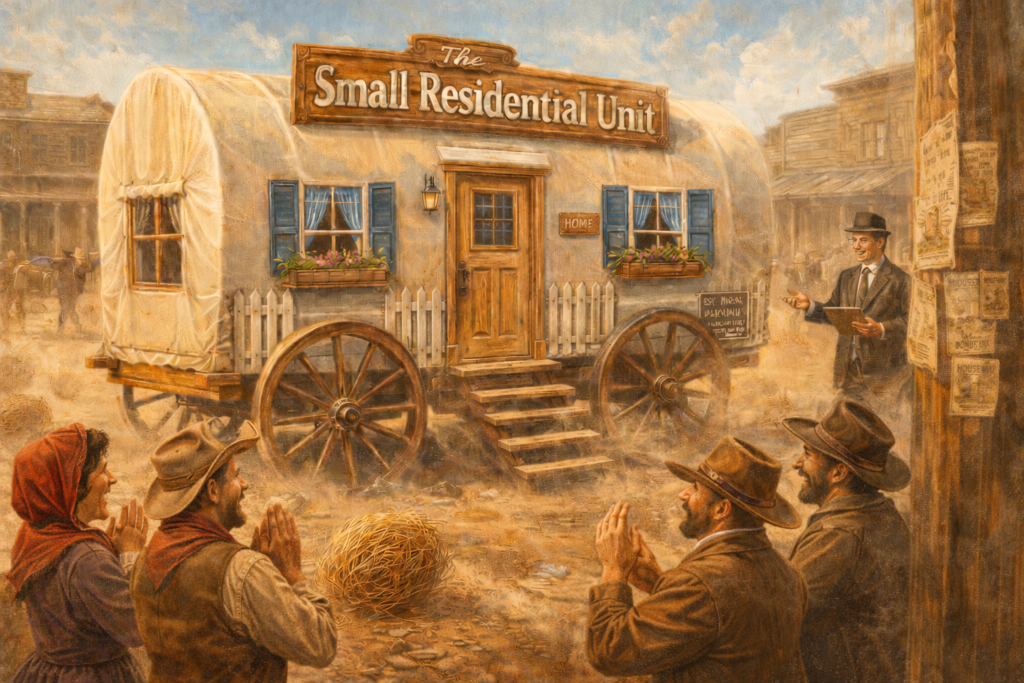
They called it a “Small Residential Unit.”
Same horse. Different saddle.
That’s not law. That’s Blazing Saddles logic.
Like saying: “It’s not a horse—it’s a stationary animal that previously ran.”
Transportation law just stands there, arms crossed, blinking slowly like: ”Y’all serious right now?”
Enter the Small Residential Unit
And then she walked in.
Every western has one character who changes the town without firing a shot. In this one, it’s the Small Residential Unit.
She didn’t arrive on a wagon. Didn’t leave tracks. Didn’t explain where she came from.
She just blazed into town, flipped her red hair over one shoulder, took over the saloon, and suddenly nobody could remember what the rules used to be.
She’s gorgeous. She’s modern. She’s full of promises.
“Don’t worry,” she says, smiling. “I’ll fix everything.”
Why Everyone Forgets the Wagon
The thing about the Small Residential Unit is she’s very good at distraction.
While everyone’s staring:
nobody’s asking about the chassis,
nobody’s checking the axles,
nobody’s counting the road miles.
The wagon that brought her in is suddenly… rude to mention.
She pours drinks called Flexibility, Innovation, and Local Control. They go down easy. Nobody asks what’s in them.
Transportation law is sitting in the corner like: “Uh… I know her.”
HUD squints and says: “Haven’t we met before?”
But the piano keeps playing, and the room is loud enough that nobody hears the question.
She Runs the Saloon Now
By the second round, she’s behind the bar.
By the third, she’s running the place.
The sheriff walks in, hesitates, checks his badge, and walks right back out. Inspectors start saying things like: “Well, she seems reasonable.”
Reasonable is dangerous out here.
Because while everyone’s focused on her name, her charm, her new framing— the wagon is still sitting out front.
Same horse. Different saddle.
Promises, Promises
She promises:
flexibility
progress
acceptance
“a path forward”
She promises she’s not like the others. She promises she’ll bring order.
What she doesn’t promise is jurisdiction.
She never says: “Here’s who’s in charge.” She never says: “Here’s which law applies.”
She just keeps smiling while the questions quietly leave the room.
Blazing Saddles Logic, Fully Deployed
This is how you end up with a town where:
a vehicle becomes a building by popular vote,
axles stop counting once painted over,
and a wagon that crossed three counties insists it was born right here.
That’s not compromise. That’s costume change.
And the Small Residential Unit knows it.
She didn’t erase the wagon. She rebranded it.
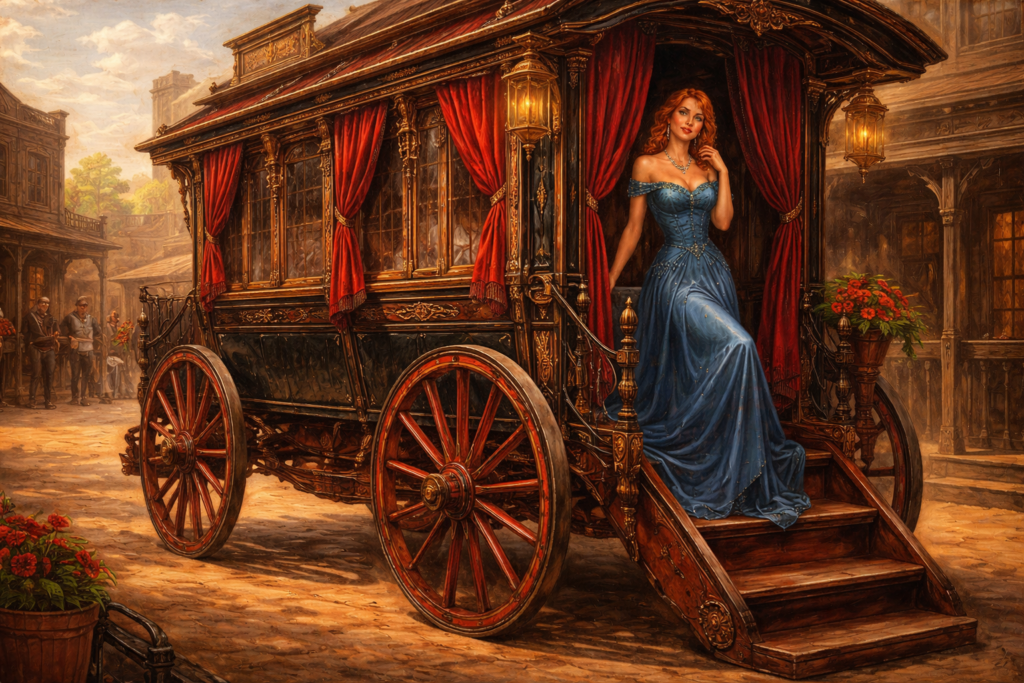
Deluxe Limited Edition: Highfalutin Luxury Small Residential Unit
Same wagon. Better drapes. Now with pure gold speckles in the rims
Available In Larger Sizes! We Can Even Connect Three Together
Every Man’s Dream, Every Wife’s Nightmare
Now let’s be honest.
Now let’s be honest.
The Small Residential Unit isn’t just trouble. She’s every man’s dream and every wife’s nightmare—the kind of presence that makes common sense quietly excuse itself and slip out the back door.
She’s got dazzling eyes that promise flexibility. Fluttering lashes that whisper innovation. A smile that says, “Trust me—I’ve got this.”
She’s built like a dream, too.
All clean lines and clever curves. Just enough square footage to feel efficient. Just enough mystery to feel modern.
Nobody asks what she’s built on.
Built Like… Something You’re Not Supposed to Ask About
She leans on the bar like she owns it.
Someone tries to ask about axles.
She laughs. Touches his arm. Changes the subject.
Another guy mentions VIN numbers.
She bats those lashes again. “Oh honey,” she says, “that’s all so old-fashioned.”
And just like that, the question disappears.
She’s not against the rules. She’s just… beyond them.
The Spell Works Fast-Except On The Ladies
By now, half the room is convinced she’s the future.
The other half knows better—but can’t quite put their finger on why.
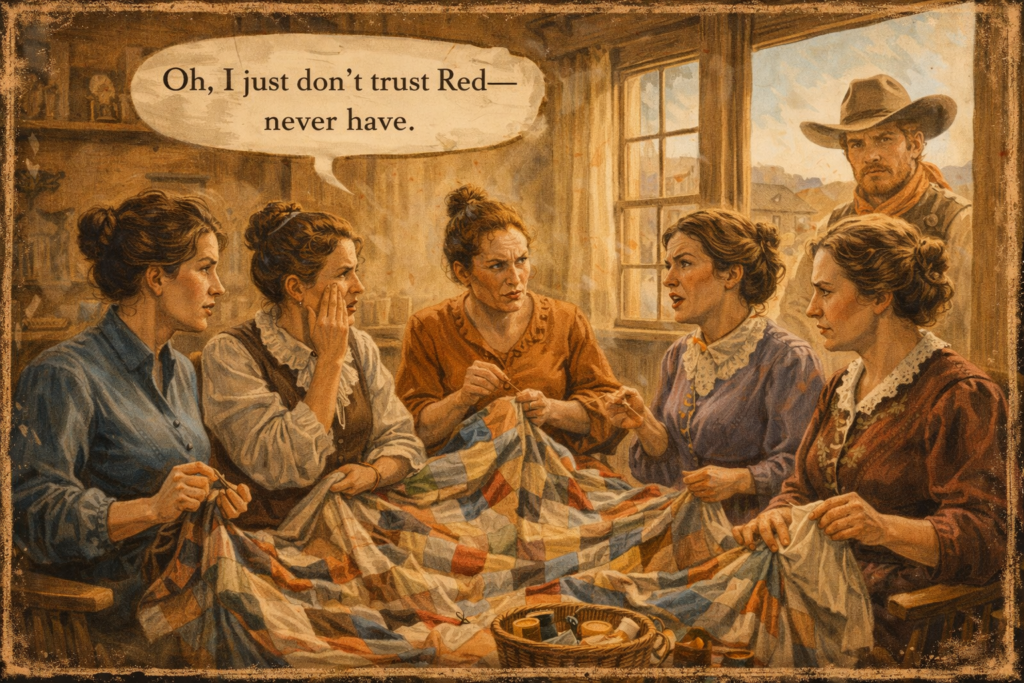
The wives are watching from across the room, arms crossed, thinking: “I don’t like her. I can’t prove it. But I don’t like her.” Gossip spreads like wildfire in all the ladies circles.
The sheriff clears his throat.
She smiles at him.
He forgets why he came in.
Promises Served Neat
She talks about:
progress
affordability
local control
a “new way forward”
She never talks about:
federal law
transportation safety
who’s actually responsible when something goes wrong
Those topics kill the mood.
And nobody wants to be the one to ruin a good time by asking about jurisdiction.
Same Horse. Better Makeup
Out back, under the moonlight, the truth hasn’t changed.
Same chassis. Same axles. Same road scars—just concealed under charm and clever naming.
Same horse. Different saddle. Much better lighting.
That’s not transformation. That’s rebranding with eyeliner.
Back Outside, the Tracks Are Gone
By morning, the dust has settled.
The saloon is louder than ever. The piano hasn’t missed a beat. The Small Residential Unit is holding court.
Out back, the wagon sits quietly.
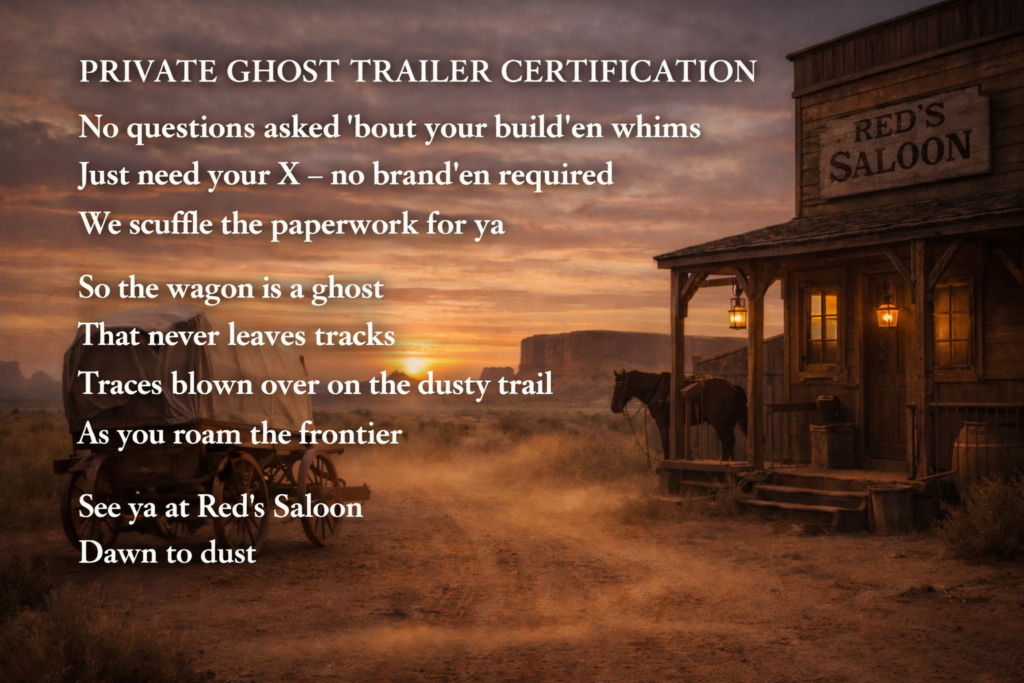
No ruts. No Tracks. No Trace, No records. No one willing to say they saw it arrive.
And somewhere down the street, a pale rider adjusts his hat.
Because in towns like this, when charm replaces answers and names replace law—
the reckoning always comes later.
And it never asks permission.
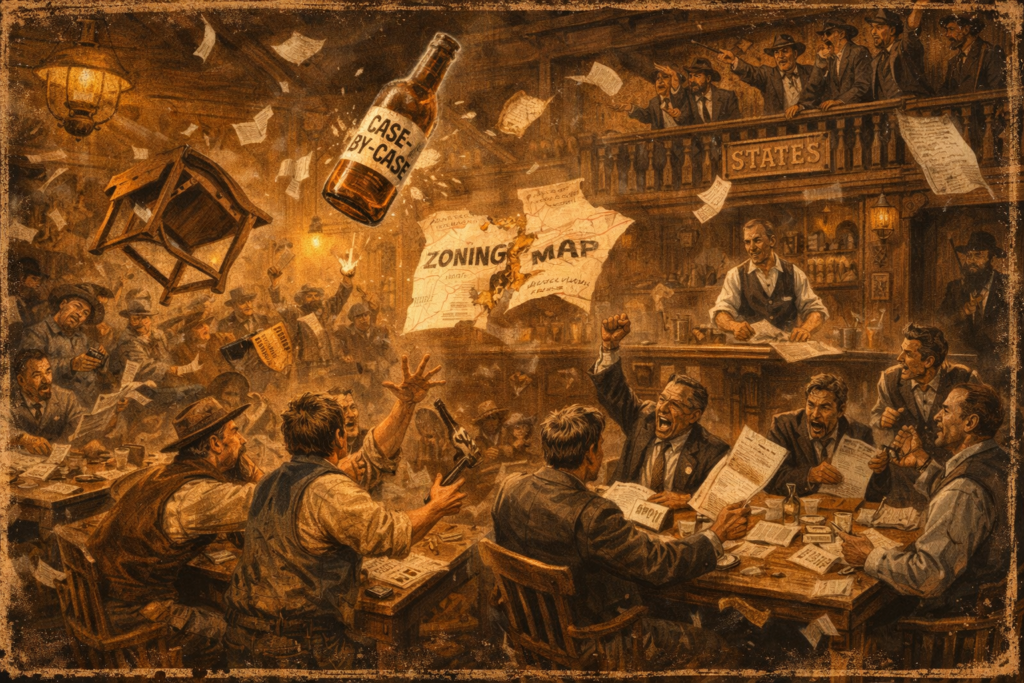
Bar Room Brawls
Every night, the place erupts.
Manufacturers at one table. Inspectors at another. States yelling from the balcony. Builders ducking flying bottles labeled “case-by-case.”
Someone shouts: “You can’t call a wagon a house!”
Someone fires back: “It’s parked, ain’t it?!”
Chairs fly. Paperwork scatters. A zoning map gets ripped clean in half.
Behind the bar, ICC wipes down the counter and says, “Now, now—we didn’t start the fight.”
No.
They just never told anyone where the sheriff was standing.
Ghost Towns And the Pale Rider
Once the Ghost Trailer passes through, towns change.
Inspectors stop asking. Officials shrug. Everyone says, “That’s how it’s always been,” even though nobody remembers yesterday.
Guidance documents flap empty in the wind. Federal arrows point nowhere. Tumbleweeds roll through enforcement authority like they own the place.
This isn’t invisibility.
This is agreed-upon blindness.
The Ghost Trailer doesn’t haunt because it can’t be seen. It haunts because everyone decided not to look.
The Last Question in Town
Every western builds to a showdown.
But here? Nobody wants to step into the street.
Because asking the real question means:
suing a state
dragging DOT, NHTSA, HUD into court
asking a judge whether axles magically stop mattering once the dust settles
That’s a Pale Rider moment.
And ICC?
They don’t ride into those towns.
They’re gone before the smoke clears.
Morning Comes for Everyone
By dawn, the spell starts to fade.
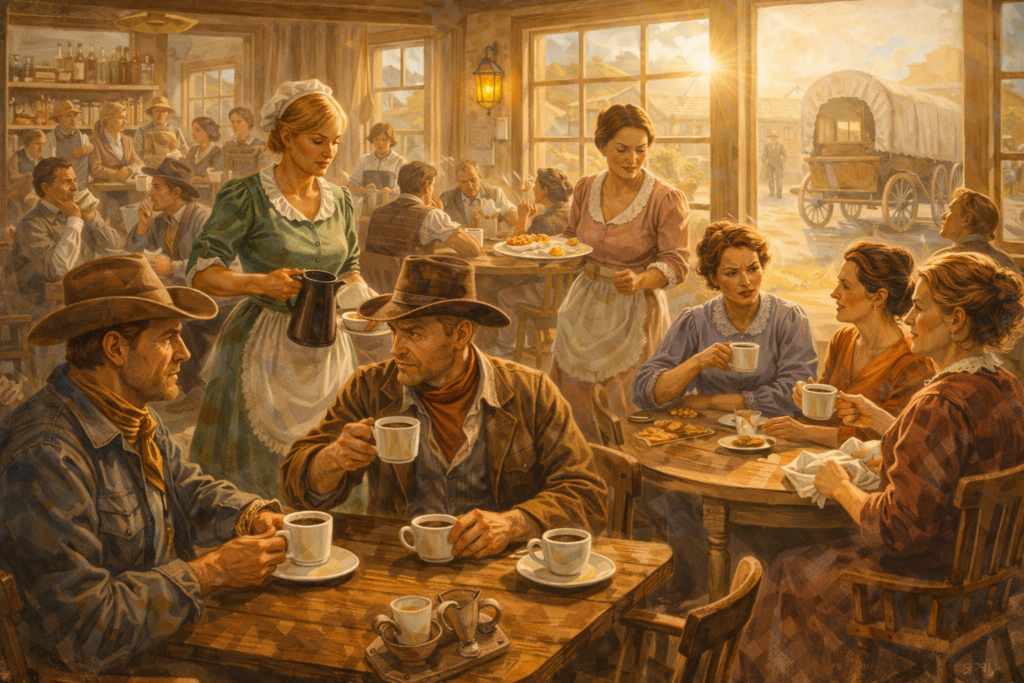
Coffee replaces whiskey. Headaches replace optimism. And someone finally notices the wagon sitting behind the saloon.
The Small Residential Unit is still smiling—but now the questions are back.
And down the street, a pale rider adjusts his coat.
Because in towns like this, when charm outruns the law—
someone eventually has to ride.
And it’s never the guy who fell for the lashes.
The Good, The Bad, and The Ugly
The Good
Federal law exists. Transportation law. Safety standards. Preemption with teeth.
The sheriff is real. He just hasn’t been invited inside.
The Bad
A system where silence replaces clarity and “voluntary” replaces accountable.
Where everyone else bleeds while the piano keeps playing.
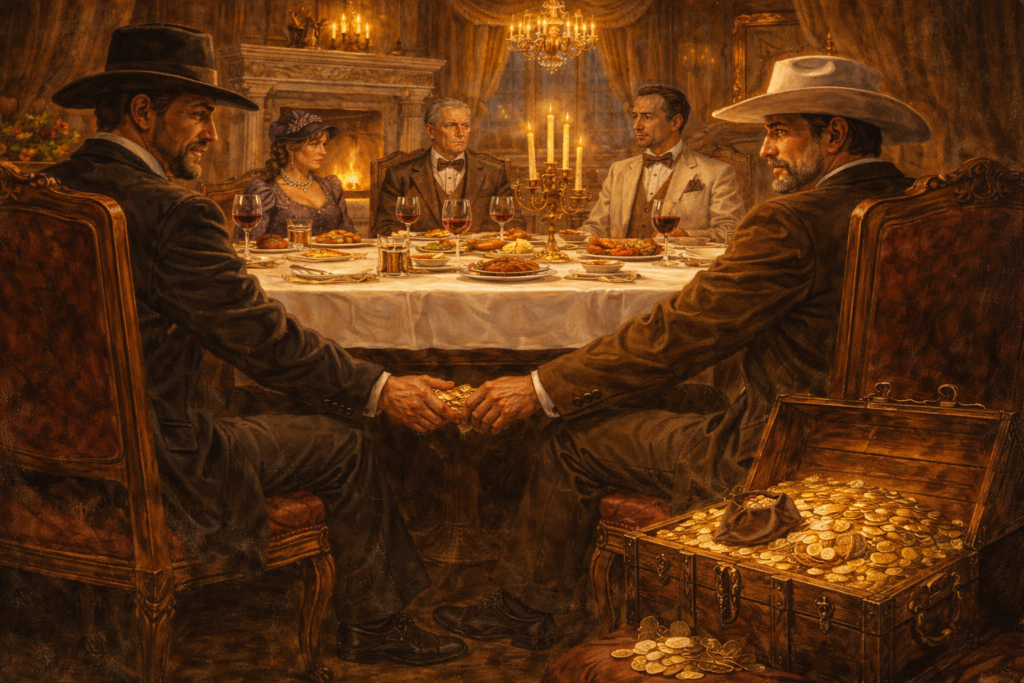
Deals are passed hand to hand beneath the table— gold heavy enough to feel, quiet enough to deny.
Faces stay composed. Eyes look away. The table is set with fine china and finer excuses.
Because in rooms like this, nothing happens by accident— it’s all agreed to quietly, while the cost is spent elsewhere.
Y’all just need to follow the money, darlin. Or the coins, if you will. Every coin trail leads to Rome.
The Ugly
A wagon with broken axles pretending it never rolled. A house that arrived by highway. A Ghost Trailer riding the gap between jurisdictions like it owns the land.
The dust hasn’t settled.
The saloon’s still standing. The piano’s still playing. The Ghost Trailer’s still parked—quiet as sin.
But folks are stepping outside now.
Hands hovering. Eyes narrowed.
Because silence only works until someone finally asks the question the town wasn’t supposed to ask.
Well… we’re NOT askin’ anymore.
We’re tellin’ the story now
Well… we’re NOT askin’ anymore. We’re tellin’ the story now—and we’re writin’ the endin’. We’re tired of tall tales and the Big Bad Corporations.
And we’re stirrin’ up dust in every territory.
We’re pioneers with spirit and grit—and we need homesteads. For our young’uns. For our wounded soldiers. For our families.
Are You With Me? We Need A Posse: We Ride At Dawn
Related Blog Posts
Satire Song- The Little House In The Desert That Leaves No Tracks
A Western Satire Tale Of Tiny House Swindlin’, Rustled By Free-Wheelin’ Back Door Dealin' By Small Residential Unit Rich Barons.
ICC Purposely Omits My Complaint From ICC 1215 Website
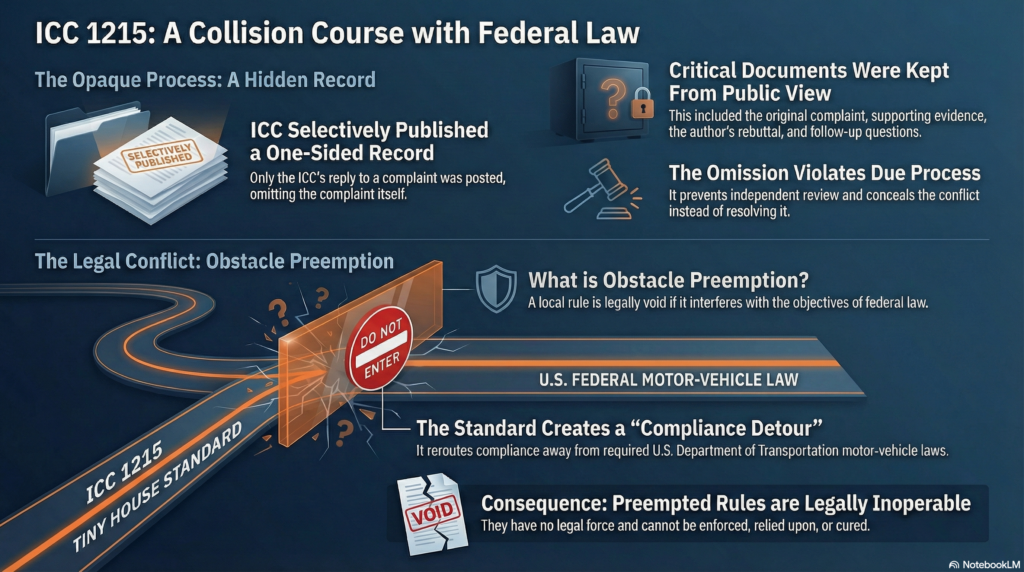
During the development of ICC/THIA 1215, Design, Construction and Regulation of Small Residential Units and Tiny Houses for Permanent Occupancy, questions of federal preemption are unavoidable. The standard reaches into areas governed by United States federal motor-vehicle and transportation law, making transparency and careful legal review essential. In that context, I submitted a written complaint raising federal preemption concerns and providing supporting documentation. What followed raised serious concerns—not about disagreement, but about how the preemption process and public record were handled.
ICC publicly posted only its reply to my complaint, identifying me by name, while withholding my actual complaint, my rebuttal clarifying the unresolved issues, and the ICC Board Committee’s refusal to answer my follow-up questions. This is particularly troubling in light of ICC Council Policy CP#49-21, Conforming Codes and Standards to United States Federal Law and International Law. CP#49-21 states that ICC’s Codes and Standards should conform to, and not conflict with, U.S. federal law, and it authorizes the ICC Board of Directors—acting on advice of counsel—to strike or modify provisions when it is more likely than not that federal law preempts them.
ICC 1215 Tiny Houses Vs Small Residential Unit Detour
The ICC/THIA 1215 standard was introduced under the banner of regulating tiny houses, but in practice it has redirected and subordinated them beneath an invented category—the Small Residential Unit. Rather than advancing the existing, codified recognition of tiny houses, the standard elevates the Small Residential Unit into a primary regulatory position, displacing tiny houses and severing them from established federal and state compliance frameworks. This detour strips tiny houses on wheels of their lawful motor-vehicle compliance pathway, fragments regulatory authority, and replaces a working, recognized system with a new construct that lacks statutory grounding, uniform adoption, or clear placement authority. The result is not clarity or safety, but regulatory confusion, delayed approval, and the effective hijacking of tiny houses by a category that did not previously exist in code.
Converting A Wheeled Structure To Real Property Is Codified In Federal And State Law
In order for a wheeled structure, which is considered personal property to be converted into real property that is tied to land, it must first be in compliance with all NHTSA and DOT requirements. These steps are codified into federal and state law, and is a requirement to obtain a mortgage.
A Chassis Has A Fixed Federal Indentity
A chassis does not have the option to have an ‘identity fluid identification‘ where you can check the box of chassis, trailer, or other. It has a fixed federal identity. The other issue is that there is a federal codified process in CFR that has a transition process from personal to real property for chassis structures. ICCTHIA 1215 is trying to skip the process and just have the tiny house with the integrated chassis to be classified as a dwelling. It does not work like that.
Federal law draws a clear and mandatory distinction between real property and personal property, and these categories are mutually exclusive. Under the Federal Management Regulation administered by the General Services Administration, real property is defined as land and improvements that are affixed to land, including buildings, structures, and fixtures. Affixation to land is the operative legal condition that converts an item into real property (41 CFR § 102-71.20). In contrast, personal property is defined broadly as all property other than real property, creating a categorical exclusion with no overlap (41 CFR § 102-36.40). Federal regulations do not recognize a hybrid or dual-status category in which a structure may be treated simultaneously as both.