State Wide Building Code For Modular Building Units
Following Virginia, Utah became the second state to adopt the ICCMBI 1200 AND 1205 standards and is the foundation of Utah’s first ever Modular State Program. All the press releases fail to mention that ASTM E541-22 is an alternative to the ICC standards that they have adopted as well.
The State of Utah Modular Building Program is administered by the Division of Facilities Construction and Management. Administration of this program is an independent function of the division’s activities which provide construction project management services and facilities management of state-owned buildings.
Utah Code 15A-1, Factory Built Housing and Modular Units Administration Act, adopted a statewide building code for modular building units and granted authority to the Division of Facilities Construction and Management (DFCM) for oversight and regulation of the State of Utah Modular Building Program.
DFCM administration of the modular building program regulates the following:
Approved Modular Manufacturers
Approved Third-party Inspection Agencies
Approved Third-party inspectors
Modular Building Program Fees
Modular Certification Decals
Modular Building Program Third Party Inspection Agency Application
Be licensed and experienced in modular inspection and testing.
Employ qualified personnel per ASTM E541-22 or ICC certification standards.
Maintain $2 million in professional liability insurance.
Remain independent of any modular manufacturer.
Utah Seems To Be Following The Lead Of Virginia
Maybe Virginia, is setting the best path to follow, they have adopted ICC/MBI 1200 and 1205 and ASTME541 is listed in Virginia’s state regulations and will supersede incorporated standards if there are differing requirements.
The ICC news release did not mention ASTME541.
I knew that Virginia had previously referenced ASTME541 before, so I reached out to Jeff Brown, and asked him if ASTME541 was still relevant. This was his answer.
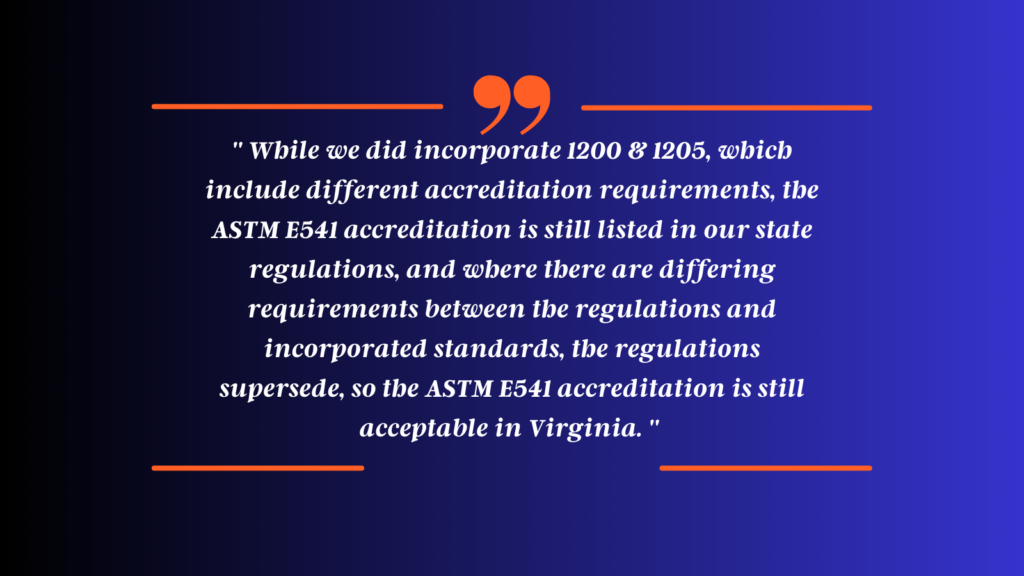
” While we did incorporate 1200 & 1205, which include different accreditation requirements, the ASTM E541 accreditation is still listed in our state regulations, and where there are differing requirements between the regulations and incorporated standards, the regulations supersede, so the ASTM E541 accreditation is still acceptable in Virginia. ”
Sincerely,
JEFF BROWN, MCP, CBO, CFM
State Building Codes Office Director
Virginia Department of Housing and Community Development (DHCD)
Why Continuing to Adopt ASTM E541 Is the Most Cost-Effective Path for Off-Site Construction
A Proven Standard the Market Already Pays For
For more than 40 years, ASTM E541 has quietly done something rare in the construction and regulatory world: it has worked.
ASTM E541 establishes the qualification criteria for third-party inspection and certification agencies involved in manufactured and off-site construction. It governs the personnel, independence, competence, and operational integrity of agencies that perform:
One of the first questions asked was ” by design, you intend to
disrupt certification in over 30 states?”
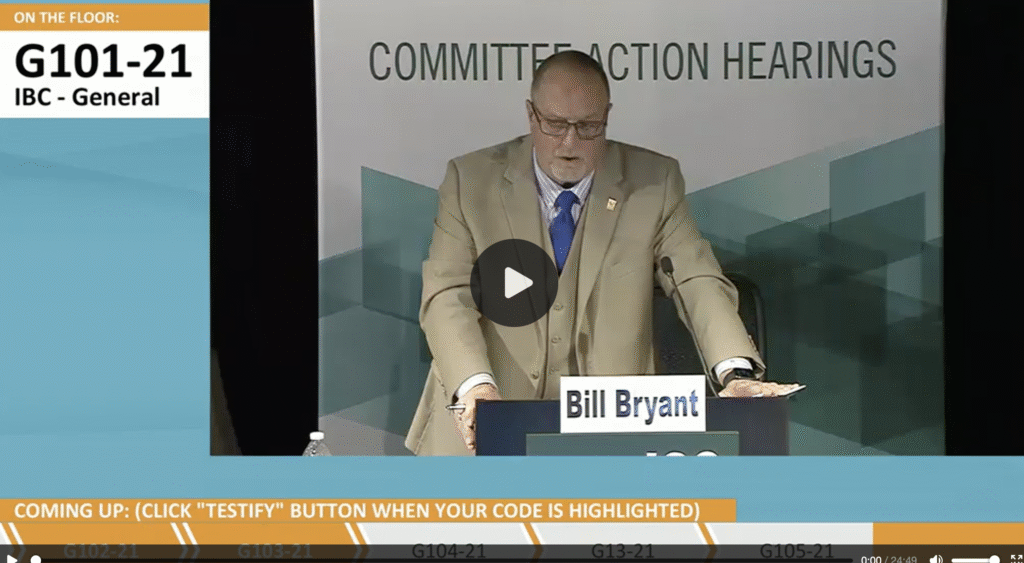
ICC/MBI 1200 And 1205 Were Turned Down At The 2024 IBC Hearing
Originally when ICC/MBI 1200 and 1205 were developed, tiny homes were excluded, then included, but after the 2024 IBC hearing, when the standards were turned down, they removed all the terms relating to tiny houses from the committee description, scope of the standards, and the body of the standards, with the ‘notion’ that tiny homes were inclusive, and there was no need to call them out.
Note: G102-21 Was The Code Proposal That Referenced The ICC/MBI 1200 And 1205 Standards.
Cost Effectiveness Isn’t About Being “Cheaper” — It’s About Avoiding Unnecessary New Costs
When policymakers or jurisdictions consider replacing ASTM E541, the key question is not whether a new standard exists.
The real question is: What new costs does replacement introduce — and who pays them?
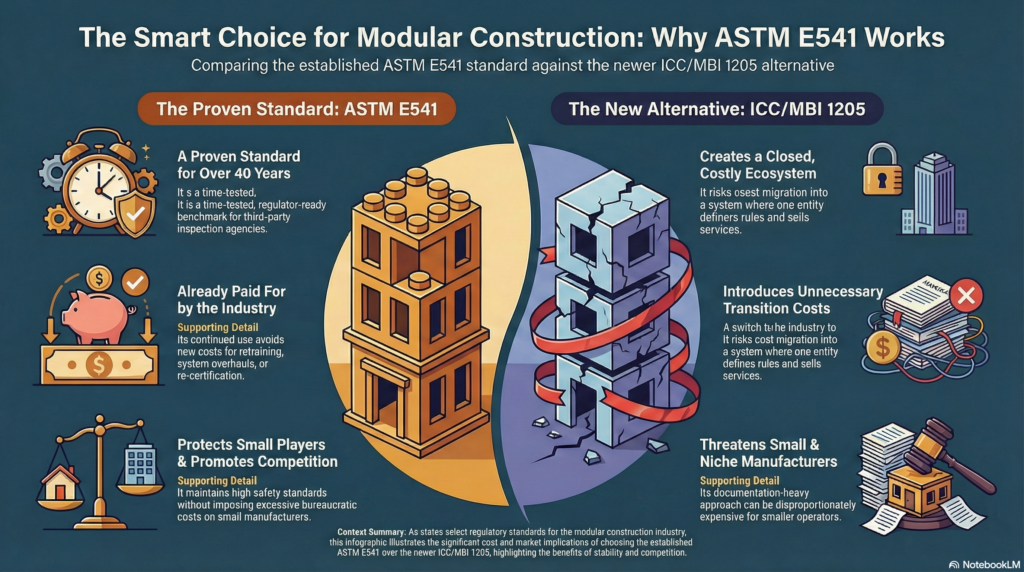
ASTM E541 Is Already Paid For
Because ASTM E541 has been embedded in:
state statutes,
HUD regulations,
third-party agency operations,
and manufacturer compliance systems,
there is no transition cost to continuing its adoption.
No retraining. No system overhaul. No new documentation regime. No re-certification cascade.
Replacing it creates costs that do not currently exist.
The Emergence of ICC/MBI 1205: Duplication, Not Necessity
The International Code Council (ICC), in collaboration with the Modular Building Institute (MBI), developed:
ICC/MBI 1200
ICC/MBI 1205
ICC/MBI 1210
These standards aim to “streamline” off-site construction regulation. On the surface, that sounds reasonable.
But when it comes to third-party inspection agency qualifications, ICC/MBI 1205 does not fill a regulatory gap.
That gap was already filled — by ASTM E541.
What ICC/MBI 1205 actually does is recreate qualification criteria inside a closed ICC ecosystem, allowing ICC to:
define the rules,
interpret them,
certify compliance,
and sell related services.
This is not cost neutrality. This is cost migration.
Why Replacing ASTM E541 Raises Costs Across the Industry
1. Forced Transition Costs
Agencies and manufacturers would be required to:
retrain personnel,
revise quality manuals,
update audit processes,
undergo new certifications,
and potentially maintain dual compliance during transition periods.
None of these costs exist today under ASTM E541.
Utah, A Big Win For Housing
Short video explainer of the blog post and why this is a BIG win for housing.
2. Increased Market Concentration Raises Prices
ASTM E541 is developed under ASTM’s open, consensus-based model, with broad industry participation and no embedded commercial advantage.
By contrast, ICC-controlled standards create:
vertical integration,
reduced third-party independence,
fewer truly neutral certifiers,
and higher long-term service costs.
When fewer entities control qualification criteria, fees go up—not down.
3. ISO-Style Escalation Without Market Need
A shift away from ASTM E541 opens the door to ISO-style compliance expectations, which are:
documentation-heavy,
consultant-dependent,
and disproportionately expensive for small operators.
For:
DIY builders,
small manufacturers,
niche producers,
this can be existential—not incremental.
Large manufacturers may absorb the cost. Small ones often cannot.
ASTM E541 Protects Small Players While Maintaining Safety
One of ASTM E541’s most overlooked strengths is that it:
maintains rigorous competency standards,
without imposing unnecessary bureaucratic overhead,
while preserving independent third-party inspection.
That balance is precisely why it has endured for four decades.
Replacing it does not improve safety. It reshapes the market.
Conclusion: ASTM E541 Is the Lowest-Cost, Lowest-Risk Option
Continuing to adopt ASTM E541:
avoids unnecessary transition costs,
preserves competition,
protects small manufacturers,
aligns with HUD regulations,
and maintains a proven safety and compliance framework.
It is not outdated. It is not incomplete. And it is not the problem that needs solving.
ASTM E541 remains the most cost-effective, market-tested, and regulator-ready standard for third-party qualification in off-site construction.
Big Win For Small Manufacturers And Third Party Agencies
Utah is the first state to adopt the ASTM E541 -22 edition and it is a big win for small manufacturers and third party agencies and is a joy to see because the standard had been accidentally withdrawn and I advocated for the reinstatement of the standard and I was in the task group that gathered the technical team and we revised the new edition. This action was a deliberate move to contribute to choices for an open marketplace.
California HCD John Westfall’s response to revising ASTME541
Janet,
Congratulations, I appreciate your efforts in resurrecting the standard. Manufactured Housing Program at California Department of Housing and Community Development will be interested in the latest evolution/iteration of E541. Just a note, the standard currently does not differentiate any particular product or type of industrialized building but only general manufacturing oversight. I am not sure it will do our Department(s) service to focus on any particular type of building being manufactured. The guidance should apply to all products manufactured.Good luck to you.
John J. Westfall District Representative II Manufactured and Factory-Built Housing Programs CA Department of Housing & Community Development 9342 Tech Center Drive, Suite 500 | Sacramento, CA 95826-2581
Jan. 30, 2026
Author’s Statement and Disclaimer
I was a proponent who spearheaded the tiny-house effort within ASTM, working collaboratively to establish the E06.26 Tiny Houses Subcommittee under the Committee on Performance of Buildings. I currently serve as Membership Secretary for the subcommittee.
Disclaimer: I do not represent ASTM International, and the views, findings, and conclusions expressed in this document are my own, based on my own experience, experience, public information and independent research. This submission is made in my individual capacity as President of Tiny House Alliance USA, in support of transparency, lawful compliance, and open participation in standards development.